8/15/2010

Yamaga Lantern Festival

[ . BACK to WORLDKIGO TOP . ]
:::::::::::::::::::::::::::::::::::::::::::::::::::::::::::::::::::::::::::::::::::::::::::::::::::

Yamaga Lantern Festival

***** Location: Yamaga, Kumamoto
***** Season: Early Autumn
***** Category: Observance


*****************************
Explanation

Yamaga Tooroo Matsuri 山鹿灯籠まつり
August 15 and 16

CLICK for more photos

This festival dates back to an ancient legend. The emperor and his followers were walking in deep fog and the villagers, carrying pine torches, helped them to find their way to safety.

Now during the night about 1000 ladies in summer yukata dance around a center stage, all wearing shining lanterns of gold and silver on their head, this is the "festival held throughout the night". They have a special song, the Yoheho-bushi, which makes it possible to do very slow elegant movements.
The men in ancient costumes line up the street with pine torches, like the ancinet folk, welcoming the emperor.

The festival is now held at the shrine Omiya Jinja 大宮神社 , as an offering to the deities at midnight of August 15.

On August 15, there is a great firework display along the river Kikuchigawa 菊池川, with about 4000 bangs of colorful fireworks.


The lanterns are made of gold and silver paper, pasted together with natural glue only. There are few craftsmen in the town who can make these special lanterns, which must be extremely light to bear on the head for a long time.
. . . CLICK here for Photos !


A group of specially trained women dancers form the center of the dance circle. These unmarried girls practise twice a week throughout the year, and train how to move their hands most elegantly.


:::::::::::::::::::::::::::::::::::::::::::::::::::::::::::::::::::::::::::::::::::::::::::::::::::


The town of Yamaga is located along the old road of Buzen, Buzen Kaido 豊前街道 in Kumamoto prefecture.
. . . CLICK here for Photos !


The town of Yamaga is also famous for the Kabuki theater YachioZa,where Tamasaburo Bando 坂東玉三郎  performs regularly since many years.


quote
Sanga-yachiyoza 山鹿八千代座 Yachiyo-za Theater

Yachiyo-za Theater in Yamaga City, Kumamoto Pref.
is a designated Important Cultural Property.

This playhouse has the features typical of a Kabuki theater in the Edo period such as box seats and the revolving stage. It has a history of 80 years but various performances are still played on the stage now.

In 1910, several wealthy merchants and businessmen in Yamaga City founded the Yachiyo-za Union to establish the theater and bought the stocks at the price of 30 yen per share. The first performance was played in January the next year, in which the greatest actors and actresses of the time such as Matsui Sumako, Okada Yoshiko, Hasegawa Kazuo, and Kataoka Chiezo played enthusiastically.

In the Yumekogura (museum) opposite the theater, precious documents and materials preserved at this theater are displayed, among them are the costumes that Bando Tamasaburo wore on the stage and the stage properties used then, leaflets of the plays, and the old cinema projection.

The theater was renovated as it was in 1923, when the theater was at its peak. Visitors can take a guided tour and see around the theater including the backstage mechanism of the revolving stage.
source : nippon-kichi.jp


*****************************
Worldwide use


*****************************
Things found on the way


The other two great fire festivals of summer in Kumamoto:
Hi-no-Kuni Matsuri, or the Land of Fire Festival
(mid-August), in Kumamoto City

Kikusui-machi Kofun Matsuri,
the Kikusui-machi Burial Mounds Festival
first weekend in August, in Kikusui-machi, Tamana-gun

*****************************
HAIKU


after the dance -
a sip of lemonade
in style


Nakayama Ishino


Lemonade bottles with the lanterns as decoration.


*****************************
Related words

. Fudo Rock at Yamaga Town 不動岩 Fudoo Iwa


Yamaga choochin 山鹿灯籠 Yamaga lanterns
. Folk Craft from Kumamoto .


BACK : Top of this Saijiki

[ . BACK to WORLDKIGO . TOP . ]
:::::::::::::::::::::::::::::::::::::::::::::::::::::::::::::::::::::::::::::::::::::::::::::::::::::

8/12/2010

Ango retreat for monks

[ . BACK to WORLDKIGO TOP . ]
:::::::::::::::::::::::::::::::::::::::::::::::::::::::::::::::::::::::::::::::::::::::::::::::::::

Retreat (ango)

***** Location: Japan
***** Season: Various, see below
***** Category: Observance


*****************************
Explanation

kigo for all summer

ango 安吾 (あんご) intensive retreat
(for monks , priests and sometimes laymen)

Skt varsha or varshika; Pali vassa;
tranquil dwelling, spiritual retreat

CLICK for original link  zenbunka.or.jp
source : zenbunka.or.jp

natsu ango 夏安吾(げあんご)summer retreat for monks
..... gegomori 夏籠(げごもり), gekomori
..... ge 夏(げ)
gegyoo 夏行(げぎょう)

ame ango 雨安吾(うあんご)retreat in the rain
angodera 安吾寺(あんごでら)temple for retreat
gezutome 夏勤(げづとめ)summer rituals
..... ketsuge 結夏(けつげ)
ge-iri 夏入(げいり)beginning the retreat
ketsusei, kessei 結制(けつせい)
ichige 一夏(いちげ)lit. "one summer retreat"
ge hyakunichi 夏百日(げひゃくにち)100 days retreat
.... hyakunichi no gyoo 百日の行(ひゃくにちのぎょう)

ge no hajime 夏の始め(げのはじめ)beginning of the retreat
ichige kujun 一夏九旬(いちげくじゅん)
zen ango 前安吾(ぜんあんご)beginning of the retreat
chuu ango 中安吾(ちゅうあんご)middle of the retreat
go ango 後安吾(ごあんご)ending of the retreat
ge no owari 夏の終り(げのおわり)end of the retreat

gedachi 夏断 (げだち) "summer abstinence"
not eating red meat, not drinking alcohol, staying home reading the sutras and copying them.


. gekyoo 夏経(げきょう) copying the sutras in summer .
gegaki 夏書 (げがき) "writing in summer"
shakyoo-e 写経会 meeting to copy sutras


gebana 夏花 "summer flowers" as offerings on the altar
..... gebana tsumi 夏花摘み(げばなつみ)picking flowers for offerings
during the ango retreat
Every day new flowers are offered.
This is done at the temples, but can also be done at home for the family altar.
The origin of this custom dates back to the Heian period, where offerings were made at the Western Tower of temple HieiZan, Kyoto.
比叡山西塔院


:::::::::::::::::::::::::::::::::::::::::::::::::::::::::::::::::::::::::::::::::::::::::::::::::::


kigo for early autumn

. gege 解夏 end of the summer ascetics .
..... ge aki 夏明き(げあき), ge no hate 夏の果(げのはて)
..... sooan, soo-an 送行(そうあん)
..... gegaki osame 夏書納(げがきおさめ)
..... butsukangibi, butsu kangi bi 仏歓喜日(ぶつかんぎび)
..... kangibi 歓喜日 "a day to rejoice"


:::::::::::::::::::::::::::::::::::::::::::::::::::::::::::::::::::::::::::::::::::::::::::::::::::


kigo for all winter

. Fuyu Ango 冬安居 Winter Retreat for Monks  
yuki ango 雪安居(ゆきあんご) retreat for monks in snow


:::::::::::::::::::::::::::::::::::::::::::::::::::::::::::::::::::::::::::::::::::::::::::::::::::::


An, ango (安居), or kessei (結制),
is a Japanese term for a three-month period of intense training for students of Zen Buddhism, lasting anywhere from 90 to 100 days.The practice during ango consists of meditation (zazen), study, and work (samu).

Ango is typically held twice a year, the first period from spring to summer and the second period from fall to winter. The word ango literally translates as "dwelling in peace"; the summer ango is referred to as ge-ango and the winter period is u-ango.
Additionally, some monasteries and Zen centers hold just one ango per year.

Concerning Zen practice in the United States, author Ellen Birx writes,
"Many centers now allow members to attend retreats on a part-time basis. Many have ango, a three-month long period of intensified practice, that members can participate in while continuing to go off to work during the day."

Taigen Dan Leighton writes a more traditional definition, "These are ninety-day training periods of concentrated practice without leaving the monastic enclosure (except for monks going out for necessary temple business). They date back to the summer rainy season retreats of Shakyamuni's time. In Japan, they have been held twice a year, summer and winter."
© More in the WIKIPEDIA !


komorido 籠人 / 籠り人 person retreating in a hall for religious practice


*****************************
Worldwide use


*****************************
Things found on the way


*****************************
HAIKU


しばらくは瀧にこもるや夏の初め
shibaraku wa taki ni komoru ya ge no hajime

for a while
I will sit behind the waterfall -
summer retreat begins


Matsuo Basho 松尾芭蕉
On May 20,year 元禄2年4月2日


source : itoyo/basho


Urami no taki 裏見の滝 - 裏見の瀧 "Back- view waterfall"
near Nikko, with a cave behind the waterfall for mountain ascetic practises.

urami 恨み to hate, have a grudge,


ほととぎす裏見の滝の裏表
hototogisu Urami no Taki no ura omote

hototogisu -
Urami no Taki
with back and front


Written on the second day of the fourth lunar month, Genroku 2
元禄2年4月2日
When Basho spent time behind the waterfall, he could not hear the hototogisu any more and felt this as URAMI.


Placenames used by
. Matsuo Basho 松尾芭蕉 - Archives of the WKD .
Oku no Hosomichi


. Fudo Myo-O 不動明王 statue at Urami .


.............................................................................


source : Yamada Naokimi


春の夜や籠り人ゆかし堂の隅
haru no yo ya komorido yukashi doo no sumi

this spring night -
a person mysteriously in retreat
in the temple corner

Tr. Gabi Greve

Spring 1688, at Hase 初瀬 (Hatsuse)
The temple in Hase is known from the Tales of Genji (Genji Monogatari), where ladies of the court came to pray to Kannon to find a suitable lover.

. Temple Hasedera 長谷寺 .


Oi no Kobumi 笈の小文
. Matsuo Basho 松尾芭蕉 - Archives of the WKD .


:::::::::::::::::::::::::::::::::::::::::::::::::::::::::::::::::::::::::::::::::::::::::::::::::::::::

gegaki, ge-gaki 夏書き copying the sutras during the retreat

natsukashiki ge-gaki no sumi no nioi kana

I remember so fondly
the smell of his ink
during summer retreat writing


at the 17th death anniversary of priest Watanabe Unriboo
渡辺雲裡坊 Watanabe Unribo Seihan (1692-1761)
from Owari


たもとして払ふ夏書の机哉
tamoto shite harau ge-gaki no tsukue kana

with her long kimono sleeve
she cleans the desk
for summer retreat writing . . .


. Yosa Buson 与謝蕪村 in Edo .


Buson also wrote this hokku when he met Seihan in Edo, making fun of their shaven heads:

水桶にうなづきあふや瓜茄子
mizu-oke ni unazuki-au ya uri nasubi

in the water tub
they nodd to each other
a melon and an eggplant


source : www.rakanneko.jp


:::::::::::::::::::::::::::::::::::::::::::::::::::::::::::::::::::::::::::::::::::::::::::::::::::::::


夏籠(げこもり)


夏籠や畳にこぼすひとりごと 
gekomori ya tatami ni kobosu hitorigoto

summer retreat -
my lonely mumblings tumble
on the tatami mats

草城句
source : http://shahai.exblog.jp/4304632/


:::::::::::::::::::::::::::::::::::::::::::::::::::::::::::::::::::::::::::::::::::::::::::::::::::

わざわざに蝶も来て舞う夏花かな  
wazawaza ni choo mo kite mau gebana kana

even the butterflies
come to dance here -
summer flower offerings

Tr. Gabi Greve


- - - - -

雪隠の歌も夏書の一ッ哉
setchin no uta mo ge-gaki no hitotsu kana

in the temple privy
this poem, too,
a true summer prayer

Tr. Chris Drake


This summer hokku is from the 4th month (May) in 1822, when the summer retreats (夏 ge, or 夏安居 ge-ango) are getting underway at various Buddhist temples. Following a custom that began in ancient India during the Buddha's lifetime, in Japan, too, monks and laypeople gather at temples and concentrate on prayer, chanting, meditation, and study during the rainy season in early summer. The retreats usually began on 4/8, the birthday of the Buddha, and could go on for as long as 90 or a hundred days. Issa seems to have visited a temple on 4/8 or a little later, and in the privy he sees a poem or poems brushed on the wall. Uta usually refers to a waka or a kyoka, a humorous "crazy waka," and it could be either one here.
Evidently the poem refers to one of the Buddhas or is inspired by Buddhism, since Issa takes it to be legitimate summer retreat writing (ge-gaki 夏書). Summer retreat writing usually referred to calligraphically writing the name of a Buddha, especially Amida, or to copying out sutras, but this humble poem, perhaps humorous, obviously expresses deep spirituality.

Chris Drake


. Kobayashi Issa 小林一茶 in Edo .


. WKD : Summer Flowers .

. Toilet, Outhouse (benjo, no setchin, toire) .


*****************************
Related words

***** .SAIJIKI ... OBSERVANCES, FESTIVALS
Kigo for Summer


BACK : Top of this Saijiki

[ . BACK to WORLDKIGO . TOP . ]
:::::::::::::::::::::::::::::::::::::::::::::::::::::::::::::::::::::::::::::::::::::::::::::::::::::

8/04/2010

Kantoo Lantern Festival Akita

[ . BACK to WORLDKIGO TOP . ]
:::::::::::::::::::::::::::::::::::::::::::::::::::::::::::::::::::::::::::::::::::::::::::::::::::

Akita Kanto Matsuri (kantoo)

***** Location:
***** Season: Early Autumn
***** Category: Observance


*****************************
Explanation

kantoo 竿燈 / 竿灯 (かんとう) "lantern on a pole"
August 3 till 6

Related to the Tanabata celebrations.


秋田かんとう祭 / 竿燈(かんとう)まつり
Kanto Matsuri


:::::::::::::::::::::::::::::::::::::::::::::::::::::::::::::::::::::::::::::::::::::::::::::::::::


quote
The Kanto Matsuri ("pole lantern festival")
is a Tanabata related celebration in Akita City, held every year from August 3rd to 6th. The highlight of the festival is an impressive display of skill in which performers balance kanto, or long bamboo poles with arrays of paper lanterns attached to the end.

The kanto poles come in different sizes with the largest measuring 12 meters, weighting 50 kilograms and carrying as many as 46 paper lanterns, lit by real candles. To the sound of drums, flutes and onlookers chanting "dokkoisho, dokkoisho", each kanto is hoisted up by a single performer who balance them on end using various techniques. The performers change every few minutes and gradually add extensions to the pole until the kanto are at their maximum height.

The main event of the festival, the Night Parades, are held nightly along Chuo Dori street in the center of the city. The various performing groups, carrying nearly 250 kanto poles, line up on the street, and when a signal is given, the poles are all raised up at once and the performers show off their skills. The event lasts about 90 minutes, and at the end of each night there is a 15 minute session during which the audience is invited to talk to the performers, take pictures and try their hand at hoisting up a kanto.

The performing area of Chuo Dori is nearly one kilometer long and there is plenty of places to sit on the sidewalk along the route. The ends of the closed off road offer a particularly spectacular view, but can be more crowded. Reserved seats set up on the median of the road are also available for between 2000 and 2500 yen, and reservations can be made beginning a few months in advance up until the day of the event if not sold out. Naturally, it is more crowded on festival days that fall on a weekend.
source / photos : www.japan-guide.com


CLICK for more photos


*****************************
Worldwide use


*****************************
Things found on the way


Kantoo, das Laternenfest in Akita,
ist ein geistiges Nationalkulturgut der Präfektur Akita (important intangible folk culture property). Das Fest, bei dem die Gottheiten um eine reiche Ernte gebeten werden, findet kurz vor der Reisernte statt – dabei ist zu erwähnen, dass die Küstenebenen von Akita bekannte Reisanbaugebiete sind. Kantoo, ein Laternenpfahl, ist ein Bambusgestell mit zahlreichen Laternen in mehreren Reihen übereinander, die großen Gestelle haben bis zu 50 Laternen und können bis zu 50 kg wiegen. Sie stellen die vollen, reifen Reisähren stellen, die von den Göttern als Gegengabe nach dem Fest erwartet werden.

Bei der großen Parade ziehen 200 Laternenpfähle durch die Stadt, abwechselnd getragen und balanciert von 3000 Männern. Allein das Balancieren dieser langen Stangen ist eine Kunst für sich, und Laternenträger ist der Wunschberuf jedes Buben in Akita. Kräftige Männer halten die Stangen auf den Handflächen, dann hieven sie sie auf die Stirn, runter auf die Schultern oder noch tiefer, auf die Hüften, immer schwankend und balancierend und umgeben von Gleichgesinnten, die bei Gefahr eingreifen und übernehmen können. Das alles geschieht zum Dröhnen der traditionellen Festmusik und unter anfeuernden Rufen der unzähligen Touristen (bis zu 1300300).

Seit 1931 gibt es einen Wettbewerb für den besten Balanceakt, während man vorher mehr um die reine Manneskraft beim Tragen der Kilos wetteiferte.

Gabi Greve
August 2001


:::::::::::::::::::::::::::::::::::::::::::::::::::::::::::::::::::::::::::::::::::::::::::::::::::::


Kanto Folk Toys

. Folk Toys from Akita .

*****************************
HAIKU


ゆらゆらと 豊作願う 竿燈や
yurayura to hoosaku negau kantoo kana

swaying back and forth
in prayer for a good harvest -
these lanterns on a pole


鮎太 Ayuta


*****************************
Related words

***** Tanabata Star Festival


. WASHOKU
Regional Dishes from Akita 秋田の郷土料理


BACK : Top of this Saijiki

[ . BACK to WORLDKIGO . TOP . ]
:::::::::::::::::::::::::::::::::::::::::::::::::::::::::::::::::::::::::::::::::::::::::::::::::::::

7/21/2010

Arai Handheld Fireworks

[ . BACK to WORLDKIGO TOP . ]
:::::::::::::::::::::::::::::::::::::::::::::::::::::::::::::::::::::::::::::::::::::::::::::::::::

Arai Handheld Fireworks (Enshu Arai tezutsu hanabi)

***** Location: Arai, Shizuoka
***** Season: Late Summer
***** Category: Observance


*****************************
Explanation

Arai Hand Cannon Fireworks Festival
遠州新居手筒花火 enshu arai tezutsu hanabi
hand-held large fireworks

last saturday in July at shrine Suwa Jinja 諏訪神社

CLICK For more photos

This remarkable firework display dates back to the Edo period, Yoshida domaine, and has since been upheld by the wild menfolk of Arai town.

It is one of the special festivals along the old Tokaido road.

On the night of the fireworks, at the Shrine Suwa Jinja a special fire is lit, and the candles handed over to the main participants of each fireworks group. They carry it in lanterns to their followers and then carefully light the cannons.

The climax is the Sarutahiko enka 猿田彦煙火(さるたひこえんか) firework. One man clad like a tengu goblin with a long nose and 10th of others after him ignite their handheld firework cannons, jump around and dance in the sparks. Large columns of fire sparks brighten the night sky.

CLICK for more photos


Look at a video here:
source : www.mustlovejapan.com

:::::::::::::::::::::::::::::::::::::::::::::::::::::::::::::::::::::::::::::::::::::::::::::::::::


Enshuu-arai-tezutsu-hanabi 


source : nippon-kichi.jp

The participants take a whole year to prepare the cannons themselves, cutting bamboo, wrapping it in tatami mats, clearing the inside of the bamboo tubes, and finally, on the day before the fireworks, a specialist adds the chemicals for the firework. It is quite dangerous if not made properly, so each participants carries responsibility.

CLICK for more, original at charm.hamazo.tv
handheld firework cannons


*****************************
Worldwide use


*****************************
Things found on the way


CLICK for more photos
Hiroshige: Tokaido


Arai-juku (新居宿)
was the thirty-first of the fifty-three stations of the Tōkaidō. It is located in the city of Kosai, Shizuoka Prefecture, Japan. During the Edo period, it was located in Tōtōmi Province. The kanji for the post station were originally also written as 荒江 and 荒井 (Arai).

Arai-juku was located on the western shores of Lake Hamana (浜名湖, Hamana-ko). Travelers crossed the lake to reach Maisaka-juku, the previous post station on the Tōkaidō. Though there were many checkpoints along the Tōkaidō, the Arai Checkpoint is the only one that existed both on land and on the water.

Both the checkpoint and post station were often damaged from earthquakes and tsunami, which led to them both being moved to different locations. The current location was established after the earthquake of 1707. The existing checkpoint building was used as a school after the checkpoint was abolished at the start of the Meiji period. It is now preserved as a museum dedicated to the history and culture of the post stations.

The Kii-no-kuni-ya (紀伊の国屋, a preserved hatago (旅籠) still remaining today, served as a rest spot for official travelers coming from Kii Province further south. It is now a local history museum.

The classic ukiyoe print by Ando Hiroshige (Hoeido edition) from 1831-1834 depicts a daimyo procession on sankin kotai crossing between Maisaka-juku and Arai-juku by boat. The daimyo is in a large vessel with his family crest, while his retainers follow in a smaller boat with the baggage.
© More in the WIKIPEDIA !


:::::::::::::::::::::::::::::::::::::::::::::::::::::::::::::::::::::::::::::::::::::::::::::::::::::


my Daruma
has many strange friends -
firework cannon


CLICK for original . araiso.info

Daruma in Arai, beside a firework cannon
だるまと手筒花火


Daruma Museum

.................................................................................


Handheld fireworks bento at Toyohashi station
壷屋弁当部 : 手筒花火
Mikawa Bento

. EKIBEN 駅弁 Station Lunch Box


:::::::::::::::::::::::::::::::::::::::::::::::::::::::::::::::::::::::::::::::::::::::::::::::::::::


Manhole with the fireworks
Toyohashi Town


. Manholes with Daruma だるま模様のマンホール  


:::::::::::::::::::::::::::::::::::::::::::::::::::::::::::::::::::::::::::::::::::::::::::::::::::


Yaramaika Music Festival, Hamamatsu
やらまいか浜松
. . . CLICK here for Photos !


*****************************
HAIKU


CLICK for more photos


確と抱く手筒花火や男意気
shika to daku tezutsu hanabi ya otoko iki

they firmly hold on
to the firework cannons -
such brave men

Tateno Masao 楯野正雄

*****************************
Related words

***** . The 53 stations of the Tokaido  

***** . Firework Display (hanabi 花火)  


BACK : Top of this Saijiki

[ . BACK to WORLDKIGO . TOP . ]
:::::::::::::::::::::::::::::::::::::::::::::::::::::::::::::::::::::::::::::::::::::::::::::::::::::

7/17/2010

Gion Festival

[ . BACK to WORLDKIGO TOP . ]
:::::::::::::::::::::::::::::::::::::::::::::::::::::::::::::::::::::::::::::::::::::::::::::::::::

Gion Festival (Gion matsuri)

***** Location: Japan
***** Season: Late Summer, July
***** Category: Observance


*****************************
Explanation

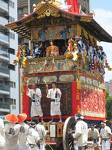
Gion matsuri 祇園祭り (ぎおんまつり)
Gion Festival in Kyoto
CLICK for many more photos
quote
Gion (祇園)
is a district of Kyoto, Japan, originally developed in the Middle Ages, in front of Yasaka Shrine. The district was built to accommodate the needs of travelers and visitors to the shrine. It eventually evolved to become one of the most exclusive and well-known geisha districts in all of Japan.


The Gion Festival (祇園祭 )
takes place annually in Kyoto and is one of the most famous festivals in Japan. It spans the entire month of July and is crowned by a parade, the Yamaboko Junkō (山鉾巡行) on July 17.

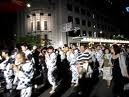
Kyoto's downtown area is reserved for pedestrian traffic on the three nights leading up to the massive parade. These nights are known as yoiyama (宵山) on July 16th, yoiyoiyama (宵々山) on July 15th, and yoiyoiyoiyama (宵々々山) on July 14th. The streets are lined with night stalls selling food such as yakitori (barbecued chicken skewers), taiyaki, takoyaki, okonomiyaki, traditional Japanese sweets, and many other culinary delights. Many girls dressed in yukata (summer kimono) walk around the area, carrying with them traditional purses and paper fans.

During the yoiyama eves leading up to the parade, some private houses in the old kimono merchant district open their entryways to the public, exhibiting valuable family heirlooms, in a custom known as the Byōbu Matsuri, or Folding Screen Festival. This is a precious opportunity to visit and observe traditional Japanese residences of Kyoto.


by Iwase Matabei 岩佐又兵衛 (1578 - 1650)

History
This festival originated as part of a purification ritual (goryo-e) to appease the gods thought to cause fire, floods and earthquakes. In 869, the people were suffering from plague and pestilence which was attributed to the rampaging deity Gozu Tennō (牛頭天王).
Emperor Seiwa ordered that the people pray to the god of the Yasaka Shrine 八坂神社, Susanoo-no-mikoto. Sixty-six stylized and decorated halberds, one for each province in old Japan, were prepared and erected at Shinsen-en, a garden, along with the portable shrines (mikoshi) from Yasaka Shrine.

This practice was repeated wherever an outbreak occurred. In 970, it was decreed an annual event and has since seldom been broken. Over time the increasingly powerful and influential merchant class made the festival more elaborate and, by the Edo Period (1603-1868), used the parade to brandish their wealth.

In 1533, the Ashikaga shogunate halted all religious events, but the people protested, stating that they could do without the rituals, but not the procession. This marks the progression into the festival's current form. Smaller floats that were lost or damaged over the centuries have been restored, and the weavers of the Nishijin area offer new tapestries to replace destroyed ones. When not in use, the floats and regalia are kept in special storehouses throughout the central merchant district of Kyoto in the care of the local people.
© More in the WIKIPEDIA !


:::::::::::::::::::::::::::::::::::::::::::::::::::::::::::::::::::::::::::::::::::::::::::::::::::::


There are many kigo related to the Gion Festival

Most of the festival floats are kigo and come with their own interesting history.


Gion-e 祗園会 (ぎおんえ) Gion Ceremonies
Gion matsuri 祗園祭(ぎおんまつり)Gion Festival

ushi no gion 牛の祗園(うしのぎおん)"Gion of the Bull"

see below, Gozu Tenoo

Gion daiko 祗園太鼓(ぎおんだいこ)Gion drum
Gion yamagasa, Gion yamakasa 祗園山笠(ぎおんやまがさ)Gion festival floats


CLICK for more photos
Deity Susano-O
Gion goryoo-e 祗園御霊会(ぎおんごりょうえ)requiem for the repose of the souls of people who died from violence, disease and the pest.


shimo no matsuri 下の祭(しものまつり)
kami no matsrui 上の祭(かみのまつり)

Gion bayashi 祗園囃(ぎおんばやし)Gion festival musicians
nikai bayashi 二階囃(にかいばやし)festival musicians on the second floor (of a float)

mikoshi arai 神輿洗(みこしあらい)purification of the mikoshi
hokodate 鉾立(ほこだて)preparing the floats and kenboko
hokomachi 鉾町(ほこまち)ward with a kenboko helbard

. Kenboko 剣鉾 (けんぼこ)
and the Goryo Festival 御霊祭 Goryo Matsuri  

CLICK for more photos
yoiyama 宵山(よいやま)
night before the grand parade (17th day)
yoimiya moode 宵宮詣(よいみやもうで)
yoi kazari 宵飾り(よいかざり)decorations on the night before the parade
In the night of yoimiya the spirits of the deities are transported into the protable shrines on the floats.


CLICK for more photos
byoobu matsuri 屏風祭(びょうぶまつり)folding screen festival
The rich merchant homes display the folding screns which are usually hidden with the family treasures in the special storehouses.
. . . CLICK here for Photos !


.................................................................................


yamaboko 山鉾(やまぼこ)Gion Festival floats
(yama and hoko)
The order of the floats is decided new for each year, using lucky lots.

LINK with phantastic photos of each float:
source : kyoto-k.sakura.ne.jp


hoko matsuri 鉾祭(ほこまつり)festival of the floats
hoko no chigo 鉾の稚児(ほこのちご)children on the floats
. naginata boko, naginataboko 長刀鉾(なぎなたぼこ)halberd float .

kakkiyo yama 郭巨山(かっきょやま)
hooshoo yama 保昌山(ほうしょうやま)
hakuga yama 伯牙山(はくがやま)
kangoku boko 函谷鉾(かんごくぼこ)
hakurakuten yama 白楽天山(はくらくてんやま)
torihoko 鶏鉾(とりほこ)
urade yama 占出山(うらでやま)
abura tenjin yama 油天神山(あぶらてんじんやま)
tokusa yama 木賊山(とくさやま)
kikusui boko 菊水鉾(きくすいぼこ)
tsuki hoko 月鉾(つきほこ)
moosoo yama 孟宗山(もうそうやま)Moso Yama
ashikari yama 芦刈山(あしかりやま)
hooka hoko 放下鉾(ほうかほこ)
iwado yama 岩戸山(いわとやま)
joomyoo yama 浄明山(じょうみょうやま)
funa hoko 船鉾(ふなほこ)
kita Kannon yama 北観音山(きたかんのんやま)(with a man)

minami Kannon yama 南観音山(みなみかんのんやま)(with a woman)

Hachiman yama 八幡山(はちまんやま)
kuronushi yama 黒主山(くろぬしやま)
koi yama 鯉山(こいやま)carp float
suzuka yama 鈴鹿山(すずかやま)

yamabushi yama 山伏山(やまぶしやま)
float of the mountain ascetics


arare Tenjin yama 霰天神山(あられてんじんやま)
for Tenjin-sama, Sugawara Michizane


hashi Benkei yama 橋弁慶山(はしべんけいやま)
for Musashibo Benkei and Yoshitsune
. . . CLICK here for Photos !


Taishi yama 太子山(たいしやま)
for Shotoku Taishi
. . . CLICK here for Photos !


CLICK here for more photos

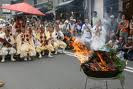
En no Gyooja yama 役行者山(えんのぎょうじゃやま)
float of En no Gyoja
An actor of the mountain ascetic En no Gyoja makes a purificatin fire and prays for the safety of the festival. He then takes part in the parade.
. . . CLICK here for Photos !


funa hoko 船鉾(ふなほこ) boat float
- Shared by Taisaku Nogi -
Joys of Japan, 2012


The Yamahoko parade on July 17 -
The 17th day of the seventh month
is the day that Noah's ark drifted to Ararat!

. The Hata Clan 秦氏 Hata Uji .
and the Korean and Christian connection !


Many yamahoko feature a special talisman for good luck, the
. chimaki 茅巻 Chimaki ritual rice cakes .
usually eaten on the Boy's Festival (now May 5).


CLICK for more photos!

quote
Each yamahoko has its own origin and talisman related it. You can buy these things at Yoiyama.

Name of Yama or HokoTalisman, Charm, Chimaki
Aburatenjin yamafor learning
Araretenjin yamafor thunder and fire
Urade yamafor easy delivery
Ennogyoujya yamafor epidemic and safe driving
Kakkyo yamafor mother's milk
Kikusui hokofor eternal youth, longevity, rush of business
Kuronushi yamafor ridding bad luck
Koi yamafor advancement in life
Tokusa yamafor ridding stray child
Jyoumyou yamafor victory
Suzuka yamafor thunder, easy delivery, property loss
Taishi yamafor knowledge, scapegoat
Naginata hokoridding bad luck
Hakurakuten yamafor learning, good luck
Hachiman yamafor crying at night
Fune hokofor easy delivery, abdominal bandage
Houshou yamafor love, marriage tie
Houka hokofor ridding bad luck
Mousou yamafor filial devotion to parents
source : kyoto.mirahouse.jp

.................................................................................


CLICK for more photos !

The miniatures are about 20 to 40 cm high. The smallest souvenir-type items are just 10 cm high.
They are made from wood and cardboard. The figures inside are made of clay.

. Kyoto Folk Art - 京都(府) .

.................................................................................


medama soodatsu 目玉争奪 fighting of the floats


mugon moode
無言詣(むごんもうで)"silent shrine visit"
Maiko pray at the otabisho places, but may not talk during their walk to and from the place.
This takes place from the 17th to the 24th day.

. Mugon Mode on October 20 .

.................................................................................


CLICK for more photos
tsurumeso 弦召(つるめそ/ 弦売僧 / 弦女曽)
lit. "please buy bow-strings"

festival on day 24

This name refers to a group of lowly, untouchables in the old society (inu jinin 犬神人). Saint Shinran spread his teaching among them, they became a group of followers of the Gion Shrine 祇園社. They took care of dirty work during the festival, handling burials and cremation grounds. They were also called tsurusashi 弦差(つるさし) or tsurumese.

The painting from the Taisho period shows the Tsurumeso in a procession, dressed in armour of the Heian period. They were defeated warriours and began making arrows and bowstrings for a living and had to stay in the ward Yumiyacho 弓矢町 (bow and arrow ward). This procession had been abolished in later years, so we now only have this painting.
source : gyojibunka

.................................................................................


Heavenly King with an Ox-Head,
Ox-Headed Deva King
gozu tenoo, gozu tenno 牛頭天王
The Japanese god of plague

CLICK for more photos. quote from dragonbeya.exblog

With the fusion of Shinto and Buddhism, Susa-no-O was identified with Gozu Tenno ("Bull-headed King of Heaven").

MORE
Gozu 牛頭 Deities with Ox-Heads


. Gozu Tennō Densetsu 牛頭天王 伝説 Legends about Gozu Tenno .


. Gion Festival . English Reference


:::::::::::::::::::::::::::::::::::::::::::::::::::::::::::::::::::::::::::::::::::::::::::::::::::

quote
Setsubun festival at Yasaka Shrine
Each Kyoto shrine has its own attraction for the Setsubun ritual. Some feature special demon costumes. Some invite celebrities. Some prepare extensive gifts and make sure that everyone gets beans. Yasaka Jinja offers dances by maiko (apprentice geisha) for the enjoyment of the gods.


Shared by Dougill John - green shinto
Joys of Japan, February 2012


:::::::::::::::::::::::::::::::::::::::::::::::::::::::::::::::::::::::::::::::::::::::::::::::::::::


There are Gion festivals celebrated in other parts of Japan, for example in Hakata (kigo see below) or in Yamanashi

CLICK for more photos
山梨 祇園祭り


*****************************
Worldwide use


*****************************
Things found on the way


Gozu Tennoo fuda 牛頭天王札 amulet for Gozu Tenno

. Nezu Jinja 根津神社 Nezu Shrine .
Tokyo


Namu Gozu Tenno 南無牛頭天王

牛頭天王社 at the temple 札林寺, Chiba
千葉県市川市大野町4-3064


*****************************
HAIKU


祗園会に羽化する少女まぎれゆく
Gion-e ni uka suru shoojo magire-yuku

at the Gion festival
this young girl grows up
as it walks along

Tsugawa Eriko 津川絵理子


uka refers to a change of an insect from a chrysalis to a butterfly, cicada or other.


*****************************
Related words

Hamo has two food seasons,
one is in summer, just after the rainy season is over. It is then eaten for the Gion Festival in Kyoto or the Tenjin Festival in Osaka (matsuri hamo).
The Gion Festival is sometimes even referred to as
"Hamo Festival".

*****
Pike conger eel (hamo)


:::::::::::::::::::::::::::::::::::::::::::::::::::::::::::::::::::::::::::::::::::::::::::::::::::::


Hakata no Gion matsuri
博多の祗園祭 (はかたのぎおんまつり)
Hakata Gion Festival
Hakata matsuri 博多祭(はかたまつり) Hakata festival

..... yamagasa 山笠(やまがさ)Yamakasa floats
oi yamagasa 追山笠(おいやまがさ)race of the floats
.... oiyama 追山(おいやま)

. . . CLICK here for Photos !

The Hakata Gion Yamagasa festival is a religious ritual of Hakata's grand tutelary shrine, Kushida Shrine. It is concentrated on "Decoration Floats", Kazari Yamagasa, which are covered with beautiful Hakata dolls and set up in various places around the town.
As opposed to the elegant and feminine Kazari Yamagasa, the masculine "Kaki Yamagasa" is carried around the city from the 10th. The climax of the festival is the Oiyama race that starts from early morning on the 15th.

. WKD : Naked Festivals .


入港の汽笛のひびく飾り山笠
nyukoo no kiteki no hibiku kazari yama

the incoming boat
blasts its horn carrying
the Yamagasa float


Nagasaki Toosei 長崎島星 Nagasaki Tosei


. Yamakasa ningyoo 山笠人形 Yamakasa festival float dolls .
Hakata Gion Yamakasa Festival

:::::::::::::::::::::::::::::::::::::::::::::::::::::::::::::::::::::::::::::::::::::::::::::::::::::


. Gozu Ten-O at Shrine Hiromine Jinja 広峰神社   

. Somin Shoorai Fu 蘇民将来符 Somin Shorai amulet .
and Gozu Tenno 牛頭天王

. Sannoo matsuri 山王祭 (さんのうまつり) Sanno Festival .
Hiyoshi matsuri 日吉祭(ひよしまつり) Hiyoshi shrine festival
sarumatsuri 申祭(さるまつり)monkey festival


. Gobelin tapestry, dragons and the Gion floats .


. Kesoobumi uri 懸想文売 vendor of love letters .
at shrine Suga Jinja 須賀神社


. Go-Oo Hooin 牛王宝印
sacred seal of the ox treasure .


BACK : Top of this Saijiki

:::::::::::::::::::::::::::::::::::::::::::::::::::::::::::::::::::::::::::::::::::::::::::::::::::::::::::::::::::::::::::

[ . BACK to DARUMA MUSEUM TOP . ]
[ . BACK to WORLDKIGO . TOP . ]

:::::::::::::::::::::::::::::::::::::::::::::::::::::::::::::::::::::::::::::::::::::::::::::::::::::::::::::::::::::::::::

7/16/2010

Home Visit (tsuto-iri)

[ . BACK to WORLDKIGO TOP . ]
:::::::::::::::::::::::::::::::::::::::::::::::::::::::::::::::::::::::::::::::::::::::::::::::::::

Home Visit (tsutoiri, tsuto iri)

***** Location: Japan
***** Season: Early Autumn
***** Category: Observance


*****************************
Explanation

tsuto iri 衝突入 (つといり) "visiting a home"
Yamada no tsuto-iri 山田のつと入(やまだのつといり)
home visit at Yamada
bon no tsuto-iri 盆のつと入(ぼんのつといり)
home visit at O-Bon ancestor festival


The Chinese characters 衝突 are usually read "shoototsu", meaning a collision or bumping into something.

tsuto-iri was on teh 16th day of the 7th lunar month.
This is the same day as yabu-iri for servants.

This is a kigo hard to translate in a short version.
It is also probably not used any more.


:::::::::::::::::::::::::::::::::::::::::::::::::::::::::::::::::::::::::::::::::::::::::::::::::::


This kigo refers to an old custom in the area of Ise Yamada
伊勢の山田地方.
This day also the third day of the ancestor festival O-Bon, when the spirits of the ancestors were send back (okuri-bon 送り盆).

On the 16th day of the seventh lunar month
(now in August), on this one day it was allowed to enter any home and visit their treasure house (kura), where the scrolls and antiques and family treasures were kept. Visitors could also inspect the special living room for visitors and take a look at the garden.

The young girls of a home were also "shown" and this was a time to make acquainances and marriage arrangements.

Some sources say this was also a chance (or duty) for the rich to display all their treasured in the yashiki living room.

The meaning of the expression can also be
"sudden intrusion into a home",
but from the haiku below we learn that all was well planned and the visitors greeted kindly.


The town of Ise (伊勢市, Ise-shi)
was formerly called Uji Yamada (宇治山田).
This city is located in eastern Mie Prefecture.
It is the area of the Ise shrine.


Ise Grand Shrine (伊勢神宮, Ise Jingū)
. Ise Shrine and its KIGO  


*****************************
Worldwide use


*****************************
Things found on the way


*****************************
HAIKU


つと入や蘭の香にみつ一座敷
tsuto-iri ya ran no ka ni mitsu hito-zashiki

home visiting -
the fragrance of orchids fills
the living room


Matsuse Seisei 松瀬青々 (1869 - 1937)


:::::::::::::::::::::::::::::::::::::::::::::::::::::::::::::::::::::::::::::::::::::::::::::::::::::


つと入やしる人に逢ふ拍子ぬけ
tsuto-iri ya shiru hito ni au hyooshi nuke

forced home visit -
I meet a person I know
and feel at ease


つと入りや 納戸の暖簾ゆかしさよ
tsuto-iri ya nando no noren yukashisa yo

forced home visit -
the door curtain in front of the store room
invites me to peek in

Tr. Gabi Greve

Usually there are no door curtains in front of storage rooms, so the curiosity of Buson is stirred.

. Yosa Buson 与謝蕪村 in Edo .


hyooshi nuke 拍子ぬけ - how best to translate?
. Discussion of facebook .


*****************************
Related words

***** Bon Festival, O-Bon, Obon お盆


BACK : Top of this Saijiki

[ . BACK to WORLDKIGO . TOP . ]
:::::::::::::::::::::::::::::::::::::::::::::::::::::::::::::::::::::::::::::::::::::::::::::::::::::

7/14/2010

Paris Festival

[ . BACK to WORLDKIGO TOP . ]
:::::::::::::::::::::::::::::::::::::::::::::::::::::::::::::::::::::::::::::::::::::::::::::::::::

Paris Festival (Parisai)

***** Location: Japan
***** Season: Late Summer
***** Category: Observance


*****************************
Explanation

Pari sai, parisai パリ祭 (ぱりさい) Paris festival
..... Parii sai 晩夏 パリー祭(ぱりーさい)
..... Parisai 巴里祭(ぱりさい)


CLICK for more photos

Celebrated on July 14.
This is a national holiday in France.

People who like France come together in the Ginza (Tokyo) and other places to celebrate.
There are often events with French chansons and other music.


There was also a famous movie in Japan, called

Pari-Sai 巴里祭 (Bastille Day).


:::::::::::::::::::::::::::::::::::::::::::::::::::::::::::::::::::::::::::::::::::::::::::::::::::


The Storming of the Bastille
occurred in Paris on the 14th of July, 1789.
The medieval fortress and prison in Paris known as the Bastille represented royal authority in the center of Paris.

In France, Le quatorze juillet (14 July)
is a public holiday, formally known as the Fête de la Fédération (Federation Holiday). It is usually called Bastille Day in English.
© More in the WIKIPEDIA !


*****************************
Worldwide use


*****************************
Things found on the way


*****************************
HAIKU


CLICK for more photos


巴里祭ピエロの黒き涙痕
Pari sai piero no kuroki namida ato

Paris Festival -
the black traces
of a clown's tears


Saito Yumiko 斉藤由美子


:::::::::::::::::::::::::::::::::::::::::::::::::::::::::::::::::::::::::::::::::::::::::::::::::::


A long list of haiku about 巴里祭
http://www.haisi.com/saijiki/parisai.htm


::::::::::::::::::::::::::::::::::::::::::::::::::::::::::::::::::::::::::::::::::::::::::::::::::

Haiku about Paris


絵葉書の巴里の青空レモン切る 
ehagaki no Pari no aozora remon kiru

on a postcard
the blue sky of Paris -
I cut a lemon


Shimonyama Yoshiko 下山芳子


:::::::::::::::::::::::::::::::::::::::::::::::::::::::::::::::::::::::::::::::::::::::::::::::::::::


a rain cloud
gently caress
the Eiffel Tower


Notre Dame -
in the cathedral
two grooms


Alex Serban
Kigo Hotline, August 2011


:::::::::::::::::::::::::::::::::::::::::::::::::::::::::::::::::::::::::::::::::::::::::::::::::::::


tango in Paris
her silhouette in his sunglasses
Eiffel Tower

tango à Paris
sa silhouette dans ses lunettes de soleil
Tour Eiffel


shared by Irena Szewczyk


:::::::::::::::::::::::::::::::::::::::::::::::::::::::::::::::::::::::::::::::::::::::::::::::::::::


July the Fourteenth---
the storming of the Bastille
by the French peasants


Fred Masarani, 2013


*****************************
Related words

***** WKD Reference

***** Tear, tears (namida) Japan. Träne, Tränen

::::::::::::::::::::::::::::::::::::::::::::::::::::::::::::::::::::::::::::::::::::::::::::::::::

7/06/2010

Flood Prevention Parade

[ . BACK to WORLDKIGO TOP . ]
:::::::::::::::::::::::::::::::::::::::::::::::::::::::::::::::::::::::::::::::::::::::::::::::::::

Flood Prevention Parade
(suiboogumi dezomeshiki)

***** Location: Tokyo, Japan
***** Season: Late Summer
***** Category: Observance


*****************************
Explanation

suiboogumi dezomeshiki 水防組出初式 (すいぼうぐみでぞめしき)
First parade of the flood prevention brigade

..... suiboo dezomeshiki 水防出初式(すいぼうでぞめしき)

On July 6.
At Nihonbashi, Hamacho, along the Sumida River.

Three members form a group, place one log in the water, get on it with their geta sandals on and start moving and rotating the log to show their prowess (kakunori 角乗).

CLICK for original LINK : mokuzai tonya


Others climb on long ladders or move the logs with long poles.

This event started in the Meiji period, when five groups were formed to help prevent damage from flooding in the town.

.................................................................................


This is an equivalent to the first parade of the fire brigade in January.

. First Fire Brigade Parade (dezome shiki)  


*****************************
Worldwide use


*****************************
Things found on the way


*****************************
HAIKU


*****************************
Related words

***** . Flood, flooding (koozui)  


::::::::::::::::::::::::::::::::::::::::::::::::::::::::::::::::::::::::::::::::::::::::::::::::::

7/04/2010

Madame Curie

[ . BACK to WORLDKIGO TOP . ]
:::::::::::::::::::::::::::::::::::::::::::::::::::::::::::::::::::::::::::::::::::::::::::::::::::

Madame Curie Memorial Day (Kyurii ki)

***** Location: Japan
***** Season: Late Summer
***** Category: Observance


*****************************
Explanation

memorial day of Madame Curie
Kyuri ki キュリー忌(きゅりーき)

Kyurii fujin sai キュリー夫人祭 (きゅりーふじんさい)
Festival of Madame Curie
Kyuurii ki キュウリー忌


.................................................................................


Fear Less, Know More

Nothing in life is to be feared,
it is only to be understood.
Now is the time to understand more,
so that we may fear less.


Madame Marie Curie

:::::::::::::::::::::::::::::::::::::::::::::::::::::::::::::::::::::::::::::::::::::::::::::::::::


CLICK For more photos

Marie Sklodowska Curie
(7 November 1867 – 4 July 1934)

was a physicist and chemist of Polish upbringing and subsequent French citizenship. She was a pioneer in the field of radioactivity and the first person honored with two Nobel Prizes —in physics and chemistry. She was also the first female professor at the University of Paris.
She married Pierre Curie.

Her achievements include the creation of a theory of radioactivity (a term she coined, techniques for isolating radioactive isotopes, and the discovery of two new elements, polonium and radium. Under her direction, the world's first studies were conducted into the treatment of neoplasms (cancers) using radioactive isotopes.
© More in the WIKIPEDIA !


*****************************
Worldwide use


*****************************
Things found on the way


*****************************
HAIKU


キュウリー忌薊は棄教の花かとも 
Kyuurii ki azami wa kikyoo no hana ka tomo 


Maria Magudarena マリア マグダレナ
http://homepage2.nifty.com/cat-fish/9811himu.html


At the radium hot spring in Misasa, Tottori, there is a statue of Madame Curie

三朝温泉 「キュリー祭」
Curie Festival, usually held in August


:::::::::::::::::::::::::::::::::::::::::::::::::::::::::::::::::::::::::::::::::::::::::::::::::::


on the late-night movie
as I try to swallow oatmeal
"Madame Curie"


Anita Virgil
source : Simply Haiku, Autumn 2006


Madame Curie is a 1943 biographical film made by MGM.
It was directed by Mervyn LeRoy and produced by Sidney Franklin from a screenplay by Paul Osborn, Paul H. Rameau and Aldous Huxley (uncredited), adapted from the biography by Eve Curie.
Marie Sklodowska (Greer Garson) is a poor, idealistic student living in Paris and studying at the Sorbonne.
© More in the WIKIPEDIA !


:::::::::::::::::::::::::::::::::::::::::::::::::::::::::::::::::::::::::::::::::::::::::::::::::::


with her life
she opens the door of physics
Curie memorial day


Nakamura Sakuo
Joys of Japan, August 2012


*****************************
Related words

***** . Misasa Tug-of-war (Misasa tsunahiki)  
At Misasa Onsen Hot Spring


***** Memorial Days of Famous People

::::::::::::::::::::::::::::::::::::::::::::::::::::::::::::::::::::::::::::::::::::::::::::::::::