1/03/2011

Futomani divination

[ . BACK to WORLDKIGO TOP . ]
:::::::::::::::::::::::::::::::::::::::::::::::::::::::::::::::::::::::::::::::::::::::::::::::::::

Futomani festival (futomani matsuri)

***** Location: Japan
***** Season: New Year
***** Category: Observance


*****************************
Explanation

Futomani matsuri 太占祭 Futomani festival
Futomani sai 太占祭

Third day of the first lunar month.
At shrine Musashi Mitake jinja 武蔵御嶽神社

The shoulderblade of a deer is touched with red-hot iron and the cracks used to read the fortune of the coming year.
This is a secret ritual and not open to the public.


source : blog.hoshinokobeya.com
Only the result of the oracle is given to the people.


This kind of divination with oracle bones comes from China.

:::::::::::::::::::::::::::::::::::::::::::::::::::::::::::::::::::::::::::::::::::::::::::::::::::


quote
The Hotsuma Futomani Divination Chart


Toyoke, lord of the northern provinces (celebrated today as the tutelary deity of the Ise Outer Shrine), drew up a chart using 51 phonetic symbols to represent the 49 deities residing in the heavens. This he presented to his daughter Isanami and her spouse Isanagi, 8th in the line of divine rulers of Japan.

Amateru, son of Isanagi and Isanami, had his nobles compose poems based on Toyoke's chart. From these, he selected 128, which were then set down as the Futomani Book of Divination (the origin of Shinto divination rituals).

The symbols A-U-WA in the inner circle represent Amemiwoya, the creator of heaven and earth.
The Amemiwoya (August Heavenly Ancestor) deity.

MORE
source : www.hotsuma.gr.jp


The Hotsuma Tsutae (also Hotuma Tsutaye, 秀真伝)
is an elaborate epic poem of Japanese legendary history which differs substantially from the mainstream version as recorded in the Kojiki and the Nihon Shoki. Its antiquity is undetermined.
© More in the WIKIPEDIA !


:::::::::::::::::::::::::::::::::::::::::::::::::::::::::::::::::::::::::::::::::::::::::::::::::::

quote
Bokusen  卜占 Divination
A method of divination for determining the divine will or foretelling the outcome of an event.
Today, bokusen most often signifies divination in general which comprises an extremely complex variety of methods. In the original sense of bokusen, however, 卜 depicted the shape of cracking that appears when the bone of an animal or a tortoise shell is heated, whereas 占 meant to report what was interpreted by reading the pattern of that cracking.

Archeological records indicate that, from the end of the Jōmon period or the early Yayoi period, deer-scapula divination (rokuboku 鹿卜) was also conducted in Japan. In this practice, hollows were carved in the underside of the bone of a deer or other large ruminants , the hollows were heated to produce cracking on the bone's other surface, and divination was based on the resulting pattern of the cracks (bokuchō).

The Kiki (both the Kojiki and Nihon shoki) and other sources also refer to this method of divination as futomani. Alongside the archaic divination ritual of kukatachi, futomani was one of two methods of determining the divine will.

Thereafter, "tortoise-shell divination" (kiboku 亀卜), which substituted a tortoise shell for the scapula of a ruminant , became increasingly popular. Both rokuboku and kiboku are thought to have originated in China; similar to China, moreover, kiboku eventually replaced futomani in Japan as well.

Under the ritsuryō system of codified laws, diviners (urabe) were employed by the Jingikan (see Ritsuryō Jingikan) and, whenever a major decision needed to be made at the imperial court and on other occasions, a diviner who had undergone purification would pray to the "deities of the divination courtyard" (uraniwa no kami) and perform kiboku.
From the Kamakura period, however, the practice of this divination method declined greatly. In addition to futomani and kiboku, the Kiki, Man'yōshū, and other texts record various other methods of bokusen.

For example,
"footstep divination" (aura) counts the number of steps walked;
"bird divination" (toriura) interprets the cries of a bird or the direction it flies; and
"evening divination" (yūke),
"bridge divination" (hashiura), and
"roadside divination" (tsujiura) interpret the words of a passerby.

In Study of Correct Divination (Seibokukō), Ban Nobutomo refers to such bokusen methods as "miscellaneous divination" (zassen) and groups them in the same category as divination methods that have the character of a "divine message communicated through a possessed person" (takusen), such as
"koto divination" (kotoura),
"dream divination" (yumeura), and
"song divination" (utaura).

Furthermore, Ban Nobutomo considers orthodox bokusen to consist exclusively of zassen, futomani, and kiboku methods that are mentioned in classical texts and he rejects other methods as lacking legitimacy. In contrast with his assertions that reflect his affiliation with the National Learning (kokugaku) movement, however, "fortune-telling" (ekisen 易占) related to Yin-Yang thought (Onmyōdō 陰陽道) and based on the sexagenary cycle of the Chinese lunar calendar (eto) and The Book of Changes (Zhou yi) had grown increasingly popular since the medieval period. From the early modern period, a divination method called bokuzei 卜筮 became widespread which used a large number of slim bamboo sticks called zeichiku  筮竹 or six four-sided stocks called sangi 算木.
source : Suzuki Kentaro, Kokugakuin 2006

:::::::::::::::::::::::::::::::::::::::::::::::::::::::::::::::::::::::::::::::::::::::::::::::::::


Musashi Mitake jinja 武蔵御嶽神社
176 Mitakesan, Ome, Tokyo - Musashimitake Shrine

. Oome, Ōme 青梅 / おうめ Ome town .


Another festival in Januray at this shrine is the
Ooguchi magami matsuri 大口真神祭り
Wolf Deity Festival


Magami or Oguchi Magami (deity with a great mouth) is the wolf deity.

Once upon a time in the Nara region there was a great old wolf, who had killed and eaten many humans. To appease him he was deified and given deer and wild boars as offerings.
So he learned to tell the difference between human beings, who fed him, and wild animals he could eat. He soon became a protector deity for good people, punishing the bad ones.
He also prevented fire and robbery and was often depicted in ema votive tablets.
With the passing of time, forests became mores sparce and wolves a rarity in our times.


The stone wolf of Mitsumine Shrine, Chichibu


. Kaneko Tohta - Chichibu Wolf Haiku .


ema with wolf and Yamato Takeru
from Hodosan Jinja 宝登山神社

More photos
source : kemono/wolf-shrine


Wolf Deity Amulet

. Amulets and Talismans from Japan . 


*****************************
Worldwide use

Chinese oracle bones


Oracle bones (kookotsu 甲骨)
are pieces of bone normally from ox scapula or turtle plastron (underside) which were used for divination chiefly during the late Shang Dynasty. The bones were first inscribed with divination in oracle bone script (Chinese: 甲骨文; pinyin: jiǎgǔwén) by using a bronze pin, and then heated until crack lines appeared in which the divinations were read.

However in later Zhou Dynasty, cinnabar/ink and brush became the preferred writing method, resulting in fewer carved inscriptions and often blank oracle bones being unearthed. The oracle bones bear the earliest known significant corpus of ancient Chinese writing, and contain important historical information such as the complete royal genealogy of the Shang dynasty.

When they were discovered and deciphered in the early twentieth century, these records confirmed the existence of the Shang, which some scholars had until then doubted.
© More in the WIKIPEDIA !


*****************************
Things found on the way


*****************************
HAIKU


吉兆の雨の太占祭り見に
kitchoo no ame no futomani masturi mi ni

auspicious rain
is falling at the Futomani festival
when I go there


Miki Seiun 三枝青雲
source : kamomeza


*****************************
Related words

***** . NEW YEAR - the complete SAIJIKI


***** . Omikuji みくじ 御籤 sacred lots .


. Amulets and Talismans from Japan . 

BACK : Top of this Saijiki

[ . BACK to WORLDKIGO . TOP . ]
:::::::::::::::::::::::::::::::::::::::::::::::::::::::::::::::::::::::::::::::::::::::::::::::::::::

1/02/2011

Hakone Ekiden Race

[ . BACK to WORLDKIGO TOP . ]
:::::::::::::::::::::::::::::::::::::::::::::::::::::::::::::::::::::::::::::::::::::::::::::::::::

Hakone Ekiden Relay Marathon (Hakone ekiden)

***** Location: Hakone, Kanagawa
***** Season: New Year
***** Category: Observance


*****************************
Explanation

Hakone ekiden 箱根駅伝 Hakone Ekiden Race


:::::::::::::::::::::::::::::::::::::::::::::::::::::::::::::::::::::::::::::::::::::::::::::::::::


quote
Hakone Ekiden (箱根駅伝), which is officially called
Tokyo-Hakone Round-Trip College Ekiden Race
(東京箱根間往復大学駅伝競走,
Tōkyō Hakone kan Ōfuku Daigaku Ekiden Kyōsō), is one of the prominent university ekiden (relay marathon) races of the year held between Tokyo and Hakone in Japan on 2 and 3 January.

This two-day race from Ōtemachi to Hakone and back is separated into five sections on each day. Due to slight variations in the courses, the first day distance is 108.0km while the distance on the second day is 109.9km.
Only male runners are allowed to run.
© More in the WIKIPEDIA !


Photo source: gojapan.about.com


*****************************
Worldwide use


*****************************
Things found on the way


Daruma of the winning Ekiden Team

第86回 箱根駅伝. H22年2月20日
source : hideaki


*****************************
HAIKU


CLICK for more photos

女坂箱根駅伝男坂

onnazaka Hakone ekiden otokozaka

women's slope
Hakone relay marathon
men's slope


Kuon Jun 久遠順

:::::::::::::::::::::::::::::::::::::::::::::::::::::::::::::::::::::::::::::::::::::::::::::::::::


箱根駅伝初東風のなかタスキ継ぎ
Hakone ekiden hatsugochi no naka tasuki tsugi

Hakone ekiden race -
in the first east wind of the year
they exchange sashes


source : umauo

The tasuki たすき, colorful cloth sashes, are a proud part of each team. They are handed from one to the next runner, who hangs it around his shoulder whilst running. They practise handing over the tasuki in order not to loose any time in the marathon.


hatsugochi, the first calm of the year, is also a kigo for the New Year.


:::::::::::::::::::::::::::::::::::::::::::::::::::::::::::::::::::::::::::::::::::::::::::::::::::


Hakone is located in the mountainous far west of the prefecture, on the eastern side of Hakone Pass. Most of the town is within the borders of the volcanically active Fuji-Hakone-Izu National Park, centered around Lake Ashi.
Hakone is the location of a noted Shinto shrine, the Hakone Gongen, which is mentioned in Heian period literature.
Hakone is noted for its onsen hot spring resorts.
© More in the WIKIPEDIA !


Hiroshige, Crossing Hakone 広重箱根図


:::::::::::::::::::::::::::::::::::::::::::::::::::::::::::::::::::::::::::::::::::::::::::::::::::


箱根越す人もあるらし今朝の雪  
箱根こす人も有らし今朝の雪
Hakone kosu hito mo aru rashi kesa no yuki

to think there are people
who are crossing Hakone pass -
snow in the morning  

Tr. Gabi Greve


Hakone pass:
someone seems to be crossing it
this morning of snow  

Tr. Barnhill


Oi no Kobumi
4th day of the 12th lunar month
Basho stayed with his friend 聴雪 as Hoosa 蓬左 near the Atsuta Shrine in Nagoya.
Even where he was, in Nagoya, it was bitter cold and snowing.
So he thought he was quite lucky to be here in the warmth at a home with friends.

Basho was on a trip before reaching Hosa, to visit a place in memory of priest Saigyo Hoshi 西行法師, the hermitage Shigitatsu An 鴫立庵 in Oiso 大磯 at the other side of Hakone pass.

. WKD - Matsuo Basho Archives 松尾芭蕉! .   


:::::::::::::::::::::::::::::::::::::::::::::::::::::::::::::::::::::::::::::::::::::::::::::::::::


Hakone in Haiku by Issa
Tr. David Lanoue


秋日和負ふて越るや箱根山
akibiyori oute koeru ya hakone yama

clear fall weather--
with burdens they cross
Mount Hakone


木がらしやかます着て行く箱根山
kogarashi ya kamasu kite yuku hakone yama

winter wind--
wearing a straw bag
on Mount Hakone


MORE - Hakone Haiku by Issa


.................................................................................


関所より吹戻さるる寒さ哉
sekisho yori fukimodosaruru samusa kana

from the checkpoint
it is blown back -
this cold


春風や女も越える箱根山
haru kaze ya onna mo koeru hakone yama

spring breeze--
a woman also crosses
Mount Hakone


. Hakone Sekisho 箱根関所 Hakone Checkpoint .

It was dangerous for women from Edo to go past this Checkpoint.
A woman alone was suspicious of being a prostitute on the run, so they usually did not travel alone.


One of the main roles of sekisho was to control 'incoming guns and outgoing women', which means to prevent weapons from being
brought into Edo and wives and children of feudal lords from fleeing from Edo.

source : www.hakonesekisyo.jp

.................................................................................


傘さして箱根越すなり春の雨
kasa sashite Hakone kosu nari haru no ame

Umbrellas at the ready,
We crossed the Hakone passes
In the spring rain.

Tr. Mackenzie


under their parasols
crossing Mount Hakone...
spring rain

Tr. Lanoue


putting up my umbrella
I crossed the Hakone pass -
spring rain

Tr. Gabi Greve


.................................................................................


. Palanquins at the Hakone pass .

. White Horse of Hakone Shrine 箱根神社.


. Japanese Puzzle Boxes .

*****************************
Related words

***** Women's slope (onna-zaka)

***** . Place Names in Haiku .


BACK : Top of this Saijiki

[ . BACK to WORLDKIGO . TOP . ]
:::::::::::::::::::::::::::::::::::::::::::::::::::::::::::::::::::::::::::::::::::::::::::::::::::::

Toshibi Okinawa

[ . BACK to WORLDKIGO TOP . ]
:::::::::::::::::::::::::::::::::::::::::::::::::::::::::::::::::::::::::::::::::::::::::::::::::::

Birthday celebrations (toshibi iwai)

***** Location: Okinawa
***** Season: New Year
***** Category: Observance


*****************************
Explanation

toshibi iwai 年日祝 (としびいわい)
birthday celebration at the New Year
..... shoonen iwai 生年祝 celebrating the birthday


From the second to the 13th (or 16th) of the first lunar month, families come together on the day of the corresponding zodiac animal to celebrate the birthday of
people of the age of 13, 25, 49, 61, 73, 85 and 97.
(13 is the next year after a full circle of 12 zodiac years.)

People make offerings to the deities and pray for a happy and healthy life.
After that, the whole family partakes in a feast.

For a daughter getting 13 and the elderly getting 61 there are even more special celebrations.


:::::::::::::::::::::::::::::::::::::::::::::::::::::::::::::::::::::::::::::::::::::::::::::::::::


Annual Temple Visit for Children until they are 13:

. juusanmairi 十三参り .


*****************************
Worldwide use


*****************************
Things found on the way


Okinawa Ryori (Okinawa Ryoori) 沖縄料理


. Okinawa Food .


*****************************
HAIKU


most colorful robes
for a most special day -
toshibi iwai


Gabi Greve

*****************************
Related words

***** . NEW YEAR - the complete SAIJIKI


. Amulets and Talismans from Japan . 

BACK : Top of this Saijiki

[ . BACK to WORLDKIGO . TOP . ]
:::::::::::::::::::::::::::::::::::::::::::::::::::::::::::::::::::::::::::::::::::::::::::::::::::::

12/19/2010

Butsumyo-E ceremony

[ . BACK to WORLDKIGO TOP . ]
:::::::::::::::::::::::::::::::::::::::::::::::::::::::::::::::::::::::::::::::::::::::::::::::::::

Buddha's Name Ceremony (butsumyoo-e)

***** Location: Japan
***** Season: Late Winter
***** Category: Observance


*****************************
Explanation

butsumyooe 仏名会 (ぶつみょうえ)
Ceremony of chanting of the Buddhas' Names

"depictions of the Buddhas", Butsumyo-E, Butsumyo Ceremony
..... o butsumyoo 御仏名(おぶつみょう)

kazukewata, kazuke wata 被綿(かずけわた)"covering cotton"
Kaenashi no kenpai 栢梨の献盃(かえなしのけんぱい)
a ritual drink of sake brewed with the juice of Japanese pears (nashi) from the village of Kaenashi in Settsu province 摂津国栢梨.
Used for a toast to the New Year.

A special ceremony held at many Buddhist temples throughout Japan.

For three days from the 19th of the 12th lunar month a memorial service is held.
The 11.093 names of the Buddhas of past, present and future (butsumyoo) are read out.
While the priests read out the names, the visitors may sit in another room and drink riutal sake.

People pray for forgiveness of the sins of the passing year and hope to purify the heart for the coming year.

At the imperial court, this ceremony has been held since the year
775, Hooki 5 宝亀五年.


The priests clad themselves in white cotton robes to express a pure heart.

As with many ceremonies, the placing of the season is problematic.
This is a ceremony for the New Year, on the last lunar month of the year. But now it falls in January.
Some saijiki place it in "early spring".


:::::::::::::::::::::::::::::::::::::::::::::::::::::::::::::::::::::::::::::::::::::::::::::::::::


chanting the names of Buddha


names of the Buddha


*****************************
Worldwide use


*****************************
Things found on the way


*****************************
HAIKU


板敷に光るつぶりや仏名会
itajiki ni hikaru tsuburi ya Butsumyoo e

all these shaven heads
shining on the floor panels -
Butsumyo Ceremony


. Miyake Shoozan 三宅嘯山 Shozan (1718 - 1801) .

(Priests with their shaven heads lean over to read the names from their scrolls. Their reflection can be seen in the polished panels.
Nowadays they sit on tatami mats and we can not see this any more.)


:::::::::::::::::::::::::::::::::::::::::::::::::::::::::::::::::::::::::::::::::::::::::::::::::::::


仏名会腰のぬけたるおはしけり 
Butsumyooe koshi o nuketaru ohashikeri

Butsumyo Ceremony -
some honorable priests
unable to stand up 


Yukifusa 之房

(Maybe some of the participants had a bit too much
of the good ritual ricewine . . . )

ohashi keri, owashi keri . owasu 御座す . polite language
御座けり


*****************************
Related words

***** . Namu Amida Butsu 
南無阿弥陀仏 the Amida Prayer
 

***** . kiku no kisewata 菊の着綿 Chrysanthemum covers .


. Amulets and Talismans from Japan . 

BACK : Top of this Saijiki

[ . BACK to WORLDKIGO . TOP . ]
:::::::::::::::::::::::::::::::::::::::::::::::::::::::::::::::::::::::::::::::::::::::::::::::::::::

12/16/2010

Chishaku-In Kyoto

[ . BACK to WORLDKIGO TOP . ]
:::::::::::::::::::::::::::::::::::::::::::::::::::::::::::::::::::::::::::::::::::::::::::::::::::

Temple Chishaku-In 智積院

***** Location: Kyoto
***** Season: See below
***** Category: Observance


*****************************
Explanation

Chishakuin rongi 智積院論義 (ちしゃくいんろんぎ)
public ceremonial debate at temple Chishaku-In

kigo for early winter

from December 10 to 13, sometimes only for 2 days

rongi is difficult to translate into English. They were ritual formal ceremonial Buddhist public debates (disputes, disputations, discussions), where the monks had to show their understanding of the Buddhist sutra scriptures.
Now also called
fuyu hoo-on koo 冬報恩講 debates in winter
"honorable preaching ceremony" in winter

During the two or three days, torches are put up from the entrance to the main hall. Many priests come from all the affiliated temples in Japan to take part in the rituals.


:::::::::::::::::::::::::::::::::::::::::::::::::::::::::::::::::::::::::::::::::::::::::::::::::::

quote
Chishaku-in is the head temple of Shingon Buddhism Chizan Sect.
It is the first temple on the Kyoto Jusan Butsu pilgrimage.


painted by Hasegawa Kyuzo

This temple is less popular among tourists but it has excellent Shoheki-ga (fusuma-e) paintings on the sliding paper doors that are National Treasures, as well as a very good garden.


Chishaku-in was founded in the 14th century as a sub-temple of Daidenpo-in that was established in Koyasan, Wakayama Prefecture by Priest Kakuban (1095-1144), in the year 1130. The mother temple then moved to Negorosan in Wakayama prefecture ten years later.

In the year 1585, Daidenpo-in, including its sub-temples, was totally destroyed by the actual ruler of the country, Toyotomi Hideyoshi (1537-1598). Chief Priest of Chishaku-in, Genyu (Gen'yu, 1529-1605), who fled from the assault, had to wait until the Toyotomi family was destroyed and the Tokugawa family came to power. In the year 1601, the first Tokugawa Shogun, Ieyasu (1543-1616) gave a place to Genyu to revive Chishaku-in. Then, in the year 1615, Ieyasu gave them neighboring Shounzen-ji temple that had been founded by Hideyoshi in memory of his son Sutemaru who died in 1591 at the age of three.

The extant Shoheki-ga (or Fusuma-e) paintings (national treasures) were those displayed in Kyakuden building of Shounzen-ji. Chishaku-in suffered from several fires during its history and about half of the paintings were lost.
source : kyoto.asanoxn.com


:::::::::::::::::::::::::::::::::::::::::::::::::::::::::::::::::::::::::::::::::::::::::::::::::::::


Vegetarian meal served at the temple lodgings.


. Vegetarian Temple Food
(shoojin ryoori 精進料理) .


:::::::::::::::::::::::::::::::::::::::::::::::::::::::::::::::::::::::::::::::::::::::::::::::::::::


Yearly festivals and ceremonies

Every month on the 21 is a meeting to copy the sutras
shakyoo no tsudoi 写経のつどい


1月 - January
1日 修正会
15日 新年祝祷会・お昆布式
21日 写経のつどい

2月 - February
3日 節分会 Setsubun
15日 常楽会
21日 写経のつどい

3月 - March
6日~12日 伝法大会/伝法灌頂(非公開)
春分の日 春季彼岸会法要
21日 正御影供
21日 写経奉納法要・写経のつどい
30日 得度式(非公開)

4月 - April
8日 仏生会(はなまつり)
21日 写経のつどい

5月 - May
21日 写経のつどい

6月 - June
15日 青葉まつり
21日 写経のつどい

7月 - July
21日 写経のつどい
31日 得度式(非公開)

8月 - August
12日 総本山施餓鬼会
21日 写経のつどい
24日 地蔵盆会 Jizo Bon
30日 永代・納骨・日月牌総供養法要

9月 - September
10日 運敞僧正忌
21日 写経のつどい
秋分の日 秋季彼岸会法要

10月 - October
3日 戦没者慰霊法要
4日 玄宥僧正忌
21日 写経のつどい

11月 - November
21日 写経のつどい

12月 - December
8日 成道会
11日・12日 冬報恩講
21日 写経のつどい
31日 除夜の鐘


Homepage of the temple

source : www.chisan.or.jp


*****************************
Worldwide use


*****************************
Things found on the way


*****************************
HAIKU


智積院論義すみたる掛うどん
Chishaku-in rongi sumitaru kake-udon

after the debate
at Chishaku-in
a bowl of udon noodles


Kawasumi Sugekatsu 川澄祐勝, priest of the Shingon sect
智山派別格本山高幡不動尊金剛寺


We can imagine the monks after the debate, sitting around the long tables and slurping their hot soup in silence.
Slurping noodle soup is customary in Japan, and considered good manners.

. Kake udon noodle soup .


quote
... the public rongi custom arose during the medieval period, when there were a lot of sects and doctrinal disputes arising within Shingon Buddhism and that the debates were aimed at overcoming misunderstandings of the "true" Shingon Buddhism of the founder, Kukai.
... in the medieval period a number of unorthodox monks were expelled from Mt. Koya, the Shingon headquarters, for doctrinal reasons. Probably there were all sorts of disputes, including material ones as well! I believe several monks were declared heretics, and one whole new sect of Shingon, the so-called Tachikawa Sect of left-handed Tantric Buddhists, was vigorously disputed and opposed, and its texts and mandalas were destroyed.

The secular warrior authorities also actively suppressed the "heretical" Tachikawa Sect. Like Tendai, Shingon is an older sect in Japan, so for a while it was a crucible of dissent and dissenting sects, so the 'rongi' at Chishakuin may reflect some of this very vigorous verbal disputation during the period when new sects were challenging orthodoxy and branching off.

'Rongi' also includes debates/doctrinal disputes between sects outside Shingon. The Lotus (Nichiren) sect and the Pure Land sect were noted for their strenuous debates and verbal disputes, which sometimes turned into fights. You can see a pale reflection of how vigorous 'rongi' were in the medieval period if you read the No play 'Sotoba Komachi' ('Komachi on the Stupa'), in which Komachi verbally defeats her Shingon monk challengers.

During the Edo period fighting (with either weapons or fists) between sects was no longer acceptable, so 'rongi' must have become more subdued, but it would be interesting to know just how disputational the present-day debates at Chishakuin are.
source : Chris Drake

*****************************
Related words

***** . hooonkoo, hoo-on koo 報恩講
Ho-onko, service for Shinran .


. Amulets and Talismans from Japan . 

BACK : Top of this Saijiki

[ . BACK to WORLDKIGO . TOP . ]
:::::::::::::::::::::::::::::::::::::::::::::::::::::::::::::::::::::::::::::::::::::::::::::::::::::

12/14/2010

Shimada Candy Festival

[ . BACK to WORLDKIGO TOP . ]
:::::::::::::::::::::::::::::::::::::::::::::::::::::::::::::::::::::::::::::::::::::::::::::::::::

Shimada Candy Festival (Shimada ame matsuri)

***** Location: Taiwa, Miyagi
***** Season: Mid-winter
***** Category: Observance


*****************************
Explanation

quote
Shimada ame matsuri 島田飴まつり 
Shimada Candy Festival takes place every December 14th at Yoshioka-Hachiman Shrine in Taiwa-cho, Kurokawa-gun, Miyagi Prefecture.

Yoshioka-Hachiman Shrine is said to date back to 1618 when Date Munekiyo, the third son of Date Masamune, and founder of Sendai Clan, moved from Shimokusa to Yoshioka and the shrine was transferred as well and re-built in the current location.

The festival is said to have begun on December 14th sometime between 1615 and 1623 when the priest of the shrine fell in love with a bride with a Shimada wedding hairstyle and he became ill. Villagers, worried about the priest, donated candies in the shape of the Shimada hairstyle to the shrine, and that led to the priest recovering from his illness.


It is believed that the shrine makes love come true and many people, wishing for luck with love, visit the shrine to seek candies.
They sell 1000 pieces of this candy.

Shimada Candy Festival is a lively festival crowded with stores selling Shimada hairstyle candies and with many young people wishing for good matchmaking.
source : nippon-kichi.jp


:::::::::::::::::::::::::::::::::::::::::::::::::::::::::::::::::::::::::::::::::::::::::::::::::::::


Yoshioka Hachiman Jinja 吉岡八幡神社


宮城県黒川郡大和町吉岡字町裏39

dondo matsuri どんと祭 Dondo festifal, January 14

wakuguri matsuri 輪くぐり祭り summer purification, July 31

Yabusame 流鏑馬(やぶさめ) archery on horseback, mid-September


:::::::::::::::::::::::::::::::::::::::::::::::::::::::::::::::::::::::::::::::::::::::::::::::::::


bunkin shimada 文金島田 bridal hair decoration


. Hanayome ningyoo 花嫁人形  bride dolls .


*****************************
Worldwide use


*****************************
Things found on the way


. WKD : Hachiman Shrines and their festivals .


*****************************
HAIKU


:::::::::::::::::::::::::::::::::::::::::::::::::::::::::::::::::::::::::::::::::::::::::::::::::::


*****************************
Related words

***** . hatsu shimada 初島田(はつしまだ)
first Shimada hairstyle.


***** . OBSERVANCES – WINTER SAIJIKI .


. Amulets and Talismans from Japan . 

BACK : Top of this Saijiki

[ . BACK to WORLDKIGO . TOP . ]
:::::::::::::::::::::::::::::::::::::::::::::::::::::::::::::::::::::::::::::::::::::::::::::::::::::

12/03/2010

Miho Shrine Festivals

[ . BACK to WORLDKIGO TOP . ]
:::::::::::::::::::::::::::::::::::::::::::::::::::::::::::::::::::::::::::::::::::::::::::::::::::

Morotabune Ship Race Ceremony

***** Location: Shimane prefecture
***** Season: Mid-Winter
***** Category: Observance


*****************************
Explanation

Rituals at the shrine Miho Jinja 美保神社, Shimane
島根県松江市美保関町美保関 608, Matsue city, Miho town


Miho Shrine is located in the small fishing village of Mihonoseki, and the main deity, Kotoshiro-nushi is worshipped as the God of good fortune, fishing and safety at sea.
The deity is the child of Okuni-nushi and is also known as Ebisu.
- source : visitshimane.com

This is the headquarter of the Kotoshirunushi Ebisu shrines 事代主神系えびす, with more than 3000 sub-shrines.

Ebisu here is known as
Narimono no Kamisama 鳴り物の神様 "Deity of Instruments"
especially the drums

. Ebisu えびす 恵比寿 .

The shrine has a long history and is already mentioned in the 出雲国風土記 Izumo Fudoki:
大穴持命(大国主神)と奴奈宣波比売命(奴奈川姫命)の間に生まれた「御穂須須美命」が美保郷に坐す.

The present-day head priest of the Yokoyama family 横山宮司 is now in the 89th generation.


- Homepage of the Shrine
- source : mihojinja.html

:::::::::::::::::::::::::::::::::::::::::::::::::::::::::::::::::::::::::::::::::::::::::::::::::::::

morotabune no shinji 諸手船神事 (もろたぶねのしんじ)
Morotabune Ritual
..... morotabune 諸手船(もろたぶね)

iyaho no matsuri 八百穂祭(いやほのまつり)
Ritual of 800 rice ears

mikuji ubai 御籤奪(みくじうばい)
fighting for fortune telling slips

CLICK for more photos


This was a harvest thanksgiving ritual, performed on November 23.
Hence the name
Ritual of 800 rice ears

After the race, the participants have a feast including a dish with wakame kelp and other types of seaweed.


:::::::::::::::::::::::::::::::::::::::::::::::::::::::::::::::::::::::::::::::::::::::::::::::::::

quote
This rite takes place on December 3 at Miho Shrine in Mihonoseki Town, Yatsuka County, Shimane Prefecture.

This relates to the myth regarding the transfer of the land (kuniyuzuri 国譲り) recorded in the Kojiki and Nihonshoki. This rite is a recreation of the myth that Ōnamuchi-no-mikoto's messenger who came in a dug-out canoe called a morotabune and the enshrined deity (saijin), Kotoshirononushi-no-mikoto 事代主神, had a talk at the Mihonoseki harbor mouth regarding land transfers.

In the evening festival, there is a ceremony with 75 kinds of special food and wine offerings (shinsen) being offered to the kami.
On the main festival day, the chief priest (gūji) uses sacred lots (mikuji) to select a steersman and rowers.

A parade led by the carrier of a makka (wooden sword), leaves the shrine and goes to Miyanada, which is before the shrine. The gūji oversees the event from a temporary hut built with curtains, in front of Miyanada 宮灘.


Two morotabune boats in the shape of ancient dug-out canoes (kurifune). Eighteen people including the makka carrier, steersman, and rowers split up and board the boats, take up paddles and begin rowing out to sea. They row to the east mouth of Mihonoseki harbor, to below the headland Mt. Marōdo, worship at the Marōdo Shrine which 客人社 is dedicated to Ōnamuchi-no-mikoto 大国主神, and then return to Miyanada.

The boats do this trip three times, competing against each other. When this is finished, the makka carriers removes the makka from the prow where it had been mounted race to offer it at the shrine. The steersman stands at the prow and performs a call-and-response prayer with gūji standing on the seawall. When this is done they cross the harbor and then there are three boat races.
source : Mogi Sakae, Kokugakuin University. 2007


- quote
Kuniyuzuri The "transfer of the land."
The term indicates a series of episodes in Kojiki and Nihongi related to the transfer of the land of Japan to the descendants of the heavenly kami (amatsukami) by Ōkuninushi, a terrestial kami (kunitsukami).
After Susanoo, the brother of Amaterasu, descended from the heavenly realm to Izumo and slew the great serpent, he married Kushinadahime. Their child (according to the main text of the Nihongi) or grandchild (according to one alternative passage of Nihongi) was Ōkuninushi. Ultimately Ōkuninushi and Sukunahikona worked together to solidify the Central Land of the Reed Plains (Toyoashihara no mizuho no kuni).
However, Amaterasu and Takamimusuhi, wanting the land for their descendants to rule, sent a messenger to Ōkuninushi asking him to transfer the land. Both Amenohohi, the first messenger sent, and Amewakahiko, the second, took sides with Ōkuninushi and did not report back. Not only did the latter marry a daughter of Ōkuninushi and fail to report back to the High Plain of Heaven (Takamanohara), but he also became the practical ruler of the Central Land of the Reed Plains.

Amaterasu then conferred with the deities of the High Plain of Heaven and sent Takemikazuchi accompanied by Amenotorifune (Torinoiwakusufune). Takemikazuchi strongly urged Ōkuninushi to transfer the land, and received the allegiance of Ōkuninushi's son Kotoshironushi , and defeated another of his sons, Takeminakata, who opposed the plan, in a trial of strength.

Then Ōkuninushi agreed to transfer the land, giving the unconcealed realm of the Central Land of the Reed Plains to the Heavenly Grandchild. Ōkuninushi retreated to govern the unseen world (yūkai, see kakuriyo) while being eternally enshrined in the Great Shrine (Izumo Taisha).

With this preparations were complete for the descent of the Heavenly Grandchild (tenson kōrin). There also exist different traditions relating to the above events. For example, Izumo no kuni no miyatsuko kamu yogoto says that the true messenger sent down from the High Plain of Heaven was Amenohinatori, the ancestor of Izumo kokusō. It is now thought that the episode of the "transfer of the land" as described in Kojki and Nihongi represents a mythical version of the process of state unification under the Yamato court. This unification was achieved over a long period of time both through negotiation with powerful local families and through military conquest.

Izumo seems to have retained its ancient political and religious authority until the very end, and it was only with its fall that final unification was achieved. This appears to have happened in the time of the emperors Sujin and Suinin.
- source : Kobori Keiko, Kokugakuin


Okuninushi (Omono Nushi) at the Grand Shrine in Izumo

Oonamuchi no Mikoto, Ōnamuchi-no-mikoto 大己貴命(おおなむちのみこと)
- - - Ookuninushi 大国主(おおくにぬし)


Kotoshironushi 事代主命 and his wife Mihotsu Hime no Mikoto 三穂津姫命

- quote -
Mihotsuhime (Nihongi) - 三穂津姫尊
According to an "alternative writing" transmitted by Nihongi, Mihotsuhime was the daughter of Takamimusuhi no mikoto, given in marriage to Ōmononushi (see Ōkuninushi no kami). In the episode known as the "transfer of the land" (kuniyuzuri), Takamimusuhi warned Ōmononushi that if the latter took a wife from among the earthly kami (kunitsukami), Takamimusuhi would consider him to be disaffected. As a result, Takamimusuhi gave his own daughter Mihotsuhime in marriage to Ōkuninushi, charging him to lead the "80 myriad hosts of kami" and forever protect the imperial line.
- source : Kokugakuin Nishioka Kazuhiko 2005 -


Mihotsu Hime 三穂津姫命は大国主神の幸魂奇魂(さきみたま・くしみたま)である「大物主神」の后神。Kotoshironushi 事代主命は神屋楯比売神(かむやたてひめ)と大国主神との間の子供なので義理の母親にあたる)


- quote -
Miho 三穂
3-307の題詞、歌にある「三穂の岩屋」は和歌山県日高郡美浜町の最西端、日ノ御崎の東、三尾漁港から更に少し東側の突角の後礒にある、久米の穴と称する大きな岩窟がそれかという。『玉勝間』に「三穂の岩屋は同郡(=日高)三尾村の廿五町ばかり東南の海べに在り。岩屋の中に石の観音の像あり」と見える。ただし『紀伊続風土記』には御崎神社(美浜町和田)の西北の地とする。この和歌山県日高郡美浜町の三穂と3-434、7-1228にある「風早の美保の浦」は同一地であるかとされるが、所在は未詳である。
また3-296の「廬原の清見の崎の三保の浦のゆたけき見つつ物思ひもなし」の三保の浦は、三保の三崎で囲まれた静岡県静岡市清水区の入海のことである。駿河国風土記逸文にある、羽衣説話の三保の松原としても有名な地である。松原が続く景勝の地で、大己貴命・三穂津姫命を祭る航海・漁業の神、御(三)穂神社を中心とする海岸一帯をいう。
- source : kokugakuin 渡辺卓 -


. Izumo taisha 出雲大社 Izumo Grand Shrine .

:::::::::::::::::::::::::::::::::::::::::::::::::::::::::::::::::::::::::::::::::::::::::::::::::::::


CLICK for original : nakamura collection


Other rituals at the shrine Miho Jinja
美保神社


The region is closely related to wakame kelp and nori seaweed.
The most famous are from the island Uppurui 十六島(うっぷるい).


美保神社の和布刈神事 mekari shinji
Cuttind kelp at Miho Shrine

Dating back to the time of Jingu Kogo on her war tour to Korea, and later Hideyoshi on the same war path.


CLICK for more photos

mekari no shinji 和布刈神事 (めかりのしんじ)
ritual of cutting seaweed
..... mekari 和布刈(めかり)cutting wakame seaweed
mekari negi 和布刈禰宜(めかりねぎ)
Shinto priest porforming the mekari ritual

observance kigo for mid-winter


mekari no shinji 和布刈(り)の神事 is also practised at other shrines in Japan, for example at the Sumiyoshi Shrine in Shimonoseki, Yamaguchi 山口県下関市の住吉神社 on the first of January, in the first high tide of the night. The kelp is then offered to the deities. After this, in the naorai 直会 ceremony, it is eaten by the attendants.

There is a shrine called Mekari Jinja 和布刈神社 at Moji, Kitakyushu, where seaweed is cut in the night from December 31 to January 1.

Mekari Shrine and the Deity
. Azumi no Isora Maru 阿曇磯良丸 Isoramaru .

.................................................................................


神迎(かみむかえ)神事 Kami mukae
Welcoming the Deity

This is a ceremony on the fifth day of the fifth lunar month, when wakame is eaten.
The fire for preparing the meal for the vegetarian offering (潔斎食 kessai shoku) is made from special flintstone. The official food offering consists of cooked rice and salt, sesame seeds, vegetables, seaweed (wakame, nori, konbu etc.) and others. Miso and soy sauce are not used for this meal, since they are prepared using fire.

This day is the Boy's Festival Day.


.................................................................................


青柴垣(あおふしがき)神事 Aofushigaki
Ritual of green fenced boats

CLICK for more photos

This is a ceremony on the third day of the third lunar month.
Nowadays it is held around the 7th of April. At the end of the rituals, wakame is eaten.
The festival is in memory of a legend, when boats decorated with green brushes wrought into fences (ao fushi) came cruising into Miho Bay.

This day is the Doll's Festival Day.

kigo for late spring


.................................................................................


紫菜島(のりしま)神社 Norishima shrine
source : 出雲海藻風土記


. Izumo Fudoki (Izumo Fuudoki 出雲風土記)   


. Nori from Uppurui Island, uppurui nori
十六島海苔(うっぷるいのり)


*****************************
Worldwide use


*****************************
Things found on the way


. Jingu Kogo 神功皇后 and Japanese Dolls .


. Peron Boat Race (peeron)  

The morotabune boats look a bit similar to the peron dragon boats.


:::::::::::::::::::::::::::::::::::::::::::::::::::::::::::::::::::::::::::::::::::::::::::::::::::::

There is another famous shrine of this name in Japan.

Miho Jinja 御穂神社 ー 三保神社

at the famous pine forest in Shizuoka.


Miho no matsubara 三保の松原 Miho pine grove

quote
a scenic area located on the Miho Peninsula in the Shimizu-ku area of Shizuoka, Japan.
Miho no Matsubara is renowned as a seashore with beautiful green pine trees and white sands spanning over seven kilometers. It has a great scenic view of Mount Fuji and the Izu Peninsula across Suruga Bay. Due to its beauty, it is designated as one of New Three Views of Japan (新日本三景, Shin Nihon Sankei)
...
Miho no Matsubara is known as the site of the legend of Hagoromo(the Feathered Robe), which is based on the traditional swan maiden motif. The story of Hagoromo concerns a celestial being flying over Miho no Matsubara who was overcome by the beauty of the white sands, green pines, and sparkling water. She removed her feathered robe and hung it over a pine tree before bathing in the beautiful waters. A fisherman named Hakuryo was walking along the beach and saw the angel. He took her robe and refused to return it until she performed a heavenly dance for him. As the angel could not return to heaven without her robe, she complied with Hakuryo's request. She danced in the spring twilight and returned to heaven in the light of the full moon leaving Hakuryo looking longingly after her.
. . .
On the second Saturday and Sunday of October, the city of Shizuoka holds a Hagoromo Festival near the site of the old pine tree.
© More in the WIKIPEDIA !


observance kigo for the New Year

Miho matsuri 三保祭 Miho festival
Miho mairi Miho mairi  三保参
On the 14th day of the first lunar month.
A divination of the coming harvest and good business made with rice gruel.
see
. tsutsugayu matsuri 筒粥祭 divination with rice gruel.
If the reading is 8, it is better than a full 10.


*****************************
HAIKU


the sweaty brows
of all these rowers -
Morotabune

Gabi Greve


*****************************
Related words

***** . Mikuji, O-Mikuji 御御籤/御神籤
Fortune Telling slips


***** . Ships, Boats and Kigo


***** Amulets for a big catch
. Tsuri yuki anzen 釣行安全 safety when fishing .


BACK : Top of this Saijiki

[ . BACK to WORLDKIGO . TOP . ]
:::::::::::::::::::::::::::::::::::::::::::::::::::::::::::::::::::::::::::::::::::::::::::::::::::::

12/01/2010

Nosaki no tsukai

[ . BACK to WORLDKIGO TOP . ]
:::::::::::::::::::::::::::::::::::::::::::::::::::::::::::::::::::::::::::::::::::::::::::::::::::
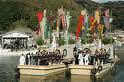
Imperial Envoys to graves (nozaki no tsukai)

***** Location:
***** Season: Late Winter
***** Category: Observance


*****************************
Explanation

nosaki no tsukai 荷前の使 (のさきのつかい )
imperial envoy to bring first fruits to graves

nosaki no hako 荷前の箱(のさきのはこ)
box holding the tribute
(nosaki no hitsu)


An old custom of the Heian period. They were brought to the shrine at Ise, imperial tobms of emperors, their wifes or mothers, altogether 10 emperors and 8 graves 十陵八墓.
The first ears of rice were on of these tributes.
This was performed on an auspicious day of the last month of the lunar year.
(Now it is placed as late winter (January) in the saijiki).

This ritual has been abolished by
Go Sanjo Tenno 三条天皇 around 1000.
(976 - 1017).


:::::::::::::::::::::::::::::::::::::::::::::::::::::::::::::::::::::::::::::::::::::::::::::::::::


quote
Fujimori Kaoru writes:

Under the ritsuryō codes, in the "Office of Mausolea" (Shoryōshi) article of the "Ordinance on Personnel" (shikiinryō) there is a order to send "a messenger to present first fruits" (nosaki no tsukai) in the twelfth month of each year to royal mausolea and tombs.

This Shoryōshi was renamed the Bureau of Mausolea (Shoryōryō) in 729. According to the Ceremonials and Protocols (Gishiki) of the early Heian Period (794-1185), the custodian of each mausoleum (except that of Jingū Kōgō) was to call at the Ministry of the Treasury (Ōkurashō) to receive the offering before, and then a tsukasa would make the offering.

In the beginning of the Heian Period another similar emissary, also called a nosaki no tsukai, was appointed in the twelfth month to deliver offerings imperial offerings from the palace to mausolea and tombs in the vicinity of the capital that had a significance for the reigning emperor.
The emperor appeared before the Kenrei gate of the palace and chose these messengers from among the middle counselors (chūnagon), advisors (sangi), or those who were not appointed as advisors but who held the third rank or higher. While the offerings delivered by the regular envoy stipulated in the ritsuryō codes were prepared by the Ministry of Treasury, the offerings for these rites carried by the latter type of envoy were provided by the Bureau of the Royal Storehouse (Kuraryō), which was the financial organ in charge of the palace finances.
source : Kokugakuin University.


*****************************
Worldwide use


*****************************
Things found on the way


*****************************
HAIKU


*****************************
Related words

*****


BACK : Top of this Saijiki

[ . BACK to WORLDKIGO . TOP . ]
:::::::::::::::::::::::::::::::::::::::::::::::::::::::::::::::::::::::::::::::::::::::::::::::::::::