Katori Jingu Shrine, see below. :::::::::::::::::::::::::::::::::::::::::::::::::::::::::::::::::::::::::::::::::::::::::::::::::::
Kashima Shrine (Kashima Jingu)
***** Location: Ibaraki
***** Season: Various, see below
***** Category: Observance
*****************************
Explanation
Kashima Shrine 鹿島神宮 Kashima Jingu
This shrine is dedicated to the deity

Tekemikazuchi standing on a catfish
Takemikazuchi no mikoto (武甕槌大神)
Kashima Daijin (鹿島大神) "Great God at Kashima".
a patron of the martial arts.
In the precincts ther is a famous training hall (doojoo) for martial arts, especially sword fighting (kendoo 剣道).
The "Great God of Kashima" rode on a white deer from Kashima all the way to the Kasuga shrine in Nara as a divine messenger, and the deer became the symbol of Nara.
The Kasuga Deer Mandala tells the story.

Kashima Deer, Photo from Rob Geraghty
Look at more
. . .Japan Photos from Rob Geraghty
Thank you, Rob, for sharing your photos!
Rob lived in Kashima for quite a while in 2002.
:::::::::::::::::::::::::::::::::::::::::::::::::::::::::::::::::::::::::::::::::::::::::::::::::::
- quote -
The Katori Shrine (香取神宮 Katori Jingū)

The main festival of the shrine is held annually on April 14, with a three-day Grand Festival held every 12 years.
The primary kami of Katori Shrine is Futsunushi (経津主神, Futsunushi-no-kami), the kami of swords and lightning, and a general of Amaterasu.
- - - - - History
The foundation of Katori Shrine predates the historical period. Per the Hitachi Fudoki, an ancient record and per shrine tradition, it was established in 643 BC, the 18th year of the reign of Emperor Jimmu. During this period, the Ō clan (多氏, Ō-shi) migrated from Higo Province in Kyushu, conquering local emishi tribes, and forming an alliance with the nearby Nakatomi clan, the progenitors of the Fujiwara clan at what is now Kashima Jingū.
In the mid-Heian period Engishiki records, it is ranked alongside Ise Jingū and Kashima Jingū as one of three shrines with the Jingū designation.
- source and more : wikipedia -
:::::::::::::::::::::::::::::::::::::::::::::::::::::::::::::::::::::::::::::::::::::::::::::::::::
kigo for the New Year

Kashima no kotobure 鹿島の事触 (かしまのことぶれ)
Kashima diviners, itinerant priests
..... kotobure 言触(ことぶれ)
36 people walk around the villages and shout the outcome of the divination at the shrine Kashima (鹿島神宮), which occured on January 4.
see below
.................................................................................

. . hakubasai, hakuba sai 白馬祭(はくばさい)
Festival of the White Horse
If you see a white horse during the New Year celebrations, you will live a long life and ward off evil for the coming year and stay healthy. Therefore shrines with a white horse make a parade for all to see the animal.
In Kashima, they parade seven white horses. If you pick up a small stone where the horses walked or have your hankerchief trodden on, this will bring your love to fulfillment.
On this day, white sweet ricewine (amazake) and porridge of seven herbs is also served.

Ema votive tablet from Katori shrine 香取神宮
. Amulets and Talismans from Japan .
:::::::::::::::::::::::::::::::::::::::::::::::::::::::::::::::::::::::::::::::::::::::::::::::::::
kigo for mid-spring

Kashima Saitoosai 鹿島祭頭祭 (かしまさいとうさい)
Kashima Saito-Sai Festival
March 9
The Saito Sai dates back more than 1200 years to the Nara Period (710 to 794). Soldiers called sakimori 防人 were sent off to do duty in far-away Kyushu. Before leaving, they gathered at Kashima Jingu to offer prayers for victory in battle and a safe journey. Many people paraded through the streets to see them off and wish them well. Lately this has become a wild parade through the city.
Now the festival is held to pray for a good harvest of the five crops, rice, wheat, beans, foxtail millet and egg millet. Officials in traditional garb with sashes to hold back the long sleeves in the five colors representing these crops parade through the street.
Others with long poles jump around a drummer, dance and sing the special festival song "Soranbushi ソーラン節". There are many wild groups of this kind, all in different colored robes.
. Reference
quote
The Legacy of Sakimori - the frontier guard conscripts
The term SAKIMORI first appeared in 645, and it is interesting to look at its etymology. Though the Japanese characters used to write it are now 防人, which is a compound difficult even for Japanese to read and literally means DEFENDING PEOPLE, the origin of the word as it PRONOUNCED comes from the characters 崎守 SAKI MORI, which means defenders of the capes, the fringes of the country, or 境守, SAKAIMORI, literally border protecters.
Another way of writing the word sakimori 先守, sheds further light on the intended purpose of this conscripted force as it means the pre- defenders, or the first line of defense, which is in fact what they would have been in case of an invasion. Their role would be to hold off the enemy long enough for a large army made up of soldiers from Western Japan to show up.
. . . The Sakimori system, which actually remained in operation for a period of 163 years ( until 826), imposed great hardships on the conscripted men and on their families ( which was why the system was eventually abolished, along with the fact that the fear of invasion also eventually faded away).
The Songs of The Sakimori - SAKIMORI NO UTA
made their way into the Manyoshu.
霰降り鹿島の神を祈りつつ
皇御軍士に我は来にしを
arare furi Kashima no kami o inoritsutsu
suberamikusa ni ware wa ki ni shi o
I have come, as a warrior for the Emperor,
to pray before the God of Kashima
source : blog.alientimes.org
arare furi 霰ふり hail falls
is a special word (makurakotoba) to denote the God of Kashima in the Manyoshu poetry.
:::::::::::::::::::::::::::::::::::::::::::::::::::::::::::::::::::::::::::::::::::::::::::::::::::
kigo for early autumn

Kashima matsuri 鹿島祭 (かしままつり)
Kashima Festival
Kashima goshinkoosai 鹿島御神幸祭(かしまごしんこうさい)
September 1 and 2
(it used to be in the seventh lunar month)
:::::::::::::::::::::::::::::::::::::::::::::::::::::::::::::::::::::::::::::::::::::::::::::::::::
observance kigo for the New Year
Hitachi obi no shinji 常陸帯の神事 (ひたちおびのしんじ)
Hitachi Belt Ceremony
Hitachi obi no matsuri 常陸帯の祭(ひたちおびのまつり)
Hitachi obi 常陸帯(ひたちおび)"Belt from Hitachi"
Kashima no obi 鹿島の帯(かしまのおび)"Belt from Kashima"
enmusubi no shinji 縁結び神事(えんむすびしんじ)
ceremony for finding a partner
On the 10th day of the first lunar month.
It is customary for a young girl to present a girdle to the Gods of Kashima and wish for a good partner in life. They would write the name of their future husband on the belt and hope for the Deities to tie the knot for them.
This dates back to Emperess Jingu Kogo and her belt during pregnancy.
. Jingu Kogo 神功皇后 and Japanese Dolls .
:::::::::::::::::::::::::::::::::::::::::::::::::::::::::::::::::::::::::::::::::::::::::::::::::::
:::::::::::::::::::::::::::::::::::::::::::::::::::::::::::::::::::::::::::::::::::::::::::::::::::
quote
Kashima Shinko 鹿島信仰
It is possible to think of Kashima faith as the sect based at Kashima Jingū in Kashima-machi, Ibaraki Prefecture, but it can broadly be divided into beliefs related to water, "tutelary of roads" (sae no kami 障の神(さえのかみ)), and Kashima shrines. Many regions and shrines bear the name "Kashima," and since these are usually found in river, stream, lake, or swamp areas, we can assume that the origins of Kashima faith are profoundly connected with water.
Images of sae no kami are called Kashima dolls, straw dolls, Shōkisama, and dōsojin, among other names. Most of these images are very large, made of straw, and are characterized by their exposed sexual organs. They protected village borders from the invasion of "plague kami" (ekishin) and were prayed to in order to ensure safety or prosperity. In some regions, during the Kashima Festival dolls are placed in "Kashima boats" and sent out to sea in order to send ekishin away.
According to the Hitachi no kuni fudoki, the "enshrined kami" (saijin) at Kashima Jingū in Kashimamachi, Ibaraki Prefecture is "Kashimanoama no ōkami," but there are many documents, including the Kojiki, which record the saijin as Takemikadsuchi no kami. The latter is worshipped at the first shrine within Kasuga Taisha, and was exalted to a "kami of the nation" (kokkashin) when the imperial court expanded into the Tōgoku region.
In the Heian Period, the Jinmyōchō section of the Engishiki records that "spirit emanations" (bunrei) of the Kashima kami and "honorable child kami" (mikogami) were enshrined in Mutsu no kuni, indicating that the cult may have spread in connection with the government’s expansion into the Tōhoku area.
Even into the early modern period, the distribution of Kashima emblems (shinsatsu) by itinerant Kashima priests called kotobure was a means of spreading the Kashima cult among the common people. The popularity of the "three-shrine pilgrimage" that included Katori, Kashima and Ikisu was the result of the development of inland waterway transport on the Tonegawa and other rivers, and is also related to the growing economic status of the Edo populace.
The ritual of "hitachiobi 常陸帯 " on January 14 at Kashima Shrine became widely known, being mentioned in The Tale of Genji and in a yōkyoku (Noh script).
From the medieval period, the virtues of Kashima were "preached" (shōdō ) by traveling monks. This can be inferred by the inclusion of the chapters "Kashima Daimyōjin" and "Kasuga Daimyōjin no koto" in the Shintoshū. The Hachimangū dōkun (also read dōkin) and various Hachiman "origin legends" (engi) include a story where the Kashima kami is equated with Azumi no isora and a legend about Shioyaki Bunta. Shioyaki Bunta is also the protagonist of the otogi-zōshi tale "Bunshō sōshi," but the Hachiman legend comes from a separate tradition. These stories spread through the preaching of low-ranking religious leaders and Zenkōji hijiri.
The "Kashima odori" performed in the western area of Sagami Bay involved dancing while dressed up as Kashima no kotobure, who would travel around distributing takusen of good or bad fortune and amulets. The dance may have originated at Kashima Shrine. There is also a legend about a "keystone" (kaname ishi) within the shrine precincts that the kami of Kashima uses to restrain a tremendous fish under the earth, whose movement causes earthquakes.
Thus, Kashima is also famous for its cult of warding off earthquakes.
source : Nogami Takahiro / Kokugakuin University.
常陸国鹿島神社 Hitachi no Kuni, Kashima Jinja
*****************************
Worldwide use
*****************************
Things found on the way
米倉鹿嶋神社 献饌行事 Yonekura-kashima-jinja Kensen-gyouji
The Kensen Ritual at Yonekura Kashima Shrine
The Kensen Ritual is performed on September 9 to 10 every year at Kashima Shrine in the Yonekura area in Osaki City, the rice producing center of Miyagi Prefecture, where famous rice brands such as Sasanishiki and Hitomebore were born.
Kensen is a Shinto ritual of offering food to the god.
It is performed before a shrine priest offers a prayer. As the oldest and most historic shrine in Osaki City, this ritual had been performed by the descendants of the vassals of the Osaki clan (a branch of the Ashikaga clan, who were descended from Seiwa Genji) until the end of World War II. Today it is performed by the hands of local people.
On the first day, the first rice ear of the season is offered to the god in appreciation for a rich harvest. Then, it is followed by other rites and ends with Naorai (banquet), in which holy sake wine and votive offerings are served to the participants. The finale of the festival is the parade of Mikoshi performed on the second day. This solemn ritual is prefecturally designated as an intangible folk cultural property (manners and customs).
Kashima Castle
was located in Shiroyama, Kashima City, Ibaraki Pref. It was built by Kashima Masamiki in the Kamakura period (1192-1333). The Kashima clan was appointed as Sodaigyoji-shoku (general director of rituals) in 1368. Since then the family was called by this title and gained prosperity.
Kashima Shrine Festivals and Kagura Dance
source : nipponkichi.jp
:::::::::::::::::::::::::::::::::::::::::::::::::::::::::::::::::::::::::::::::::::::::::::::::::::::
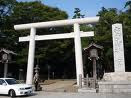
Kashima Torii 鹿島鳥居 Kashima Shrine Gate
a type of 神明鳥居 Shinmei torii, a rather simple form without an incline or secondary lintel. The topmost lintel is round and longer than the two pillars.
Another sample is at Katori Jinguu 香取神宮.
. Torii 鳥居
The Gate of a Shinto Shrine
Katori Shrine sells this :
. amulet against sainan 災難除守 misfortune and disaster .
.................................................................................
. Anzan, Talismans for easy delivery
One very famous historical Anzan Talisman in the shape of a crystal pearl was used by Fujiwara no Ishii 藤原威子 and then donated in 1034 to Kashima Shrine, later it was also used by Emperess Jingu Kogo 神功皇后 Jinguu Koogoo.
.................................................................................

source : 20century.blog2 地震錦絵
. Earthquake myths about Kashima
A giant catfish (namazu) lived in mud beneath the earth. The catfish liked to play pranks and could only be restrained by Kashima, a deity who protected the Japanese people from earthquakes. So long as Kashima kept a mighty rock with magical powers over the catfish, the earth was still. But when he relaxed his guard, the catfish thrashed about, causing earthquakes.
.................................................................................
. Yamaoka Tesshu 山岡鉄舟
His father was a retainer of the Tokugawa Government and his mother was the daughter of a Shinto priest from Kashima Shrine.

Tsukahara Bokuden 塚原卜伝
(1489 - March 6, 1571)
塚原小太郎勝義 Tsukahara Kotaro Yoshikatsu
a famous swordsman of the early Sengoku period. He was widely regarded as a kensei (sword saint). He was the founder of a new Kashima style of fencing, and served as an instructor of Shogun Ashikaga Yoshiteru and Ise provincial governor Tomonori Kitabatake.
... He later systematized the teaching of the Kashima area's local martial arts, including such approaches to combat as Kashima no tachi and Ichi no tachi. After allegedly receiving a divine inspiration from Takemikazuchi no kami, the deity of Kashima Shrine, he named his martial system as Kashima Shintō-ryū. He also, for a brief period, called his system Mutekatsu-ryū ("winning without hands").
He died of natural causes in 1571. His grave, in Suka, Japan where Baikouji once stood, is a kind of pilgrimage site for those devoted to Japanese sword-fighting arts (kenjutsu).
© More in the WIKIPEDIA !
. Tengupedia - 天狗ペディア - Tengu ABC-List.
Hinamaru Enkai 圓海 / 円海 of Haguro Mountain
? 塚原卜伝十二番勝負
? 塚原小太郎修験者円海と羽黒山 - Tsukahara Kotaro
. . . CLICK here for Photos : Tsukahara Kotaro 塚原小太郎 !

- quote -
the martial arts master Tsukahara Bokuden receives divine instruction in the art of fencing from a mysterious yamabushi (mountain priest) tengu named Enkai of Haguro Mountain.
print by 月岡芳年 Tsukioka Yoshitoshi
- source : Mark Schumacher -
. Haguro San 羽黒山 . 羽黒出羽三山 Three mountains of Dewa .

塚原卜伝 by 石ノ森 章太郎
*****************************
HAIKU
Matsuo Basho
此松の実生せし代や神の秋
kono matsu no mibae seshi yo ya kami no aki
this old pine
sprouted in the age of gods -
autumn of the Gods
Kashima Kiko, Kashima Mairi, Kashima Mode 鹿島詣
Kashima Journal, Pilgrimage to Kashima Shrine
In 1687
He started off by boat from Basho-an on the 14th day of the 8th lunar month to see the full moon.
He visited temple Kashima Konpon-Ji 鹿島根本寺 and stayed with the priest Butchoo 仏頂和尚 Butcho (1643– 1715). Basho practised Zen with Master Butcho.
He came back home on the 25th.
quote
The impact of Zen Buddhism on Basho's haikai is a popular theme for Western writers. Basho's encounter with his Zen teacher, Butcho is estimated to have taken place around 1681 (Tenwa 1) a year after Basho moved to Fukagawa.
We may recall that just before the move he composed an important poem
kare eda ni karasu no tomari taru ya aki no kure
(On the withered branch/ A crow has alighted-/ Nightfall in Autumn. Tr DK).
This autumn poem is said to reflect the influence on him of the monk-poets of the Gozan Zenrin. He made the famous trip to Kashima, east of Edo, to visit Butcho, now an old friend, at the Nemoto-ji Temple in 1687 (Jokyo 4) and it was a year before this that he composed the verse
furuike ya kawazu tobikomu mizu no oto.
. WKD : Karumi and Zen - Susumu Takiguchi .
. Travelling with Matsuo Basho 松尾芭蕉 .
. Zen Master Butchoo, Butchō 仏頂和尚 Butcho and Temple Ungan-Ji .
(1643– 1715)

Even a sake ricewine is named after Basho ! Cheers !
. A visit to Mount Tsukuba 筑波山 .
Basho in Kashima, tr. by Ueda
source : books.google.co.jp
..........................................................................
Another hokku Basho wrote on his trip to Kashima
月はやし梢は雨を持ながら
tsuki hayashi kozue wa ame o mochinagara
fleeting moon
while rain clings
to the twigs
Tr. Haldane
Written at temple 根本寺 Konpon-Ji.
- Kashima Kikoo 鹿島紀行 - A Visit to the Kashima Shrine -
. Matsuo Basho 松尾芭蕉 - Archives of the WKD .
:::::::::::::::::::::::::::::::::::::::::::::::::::::::::::::::::::::::::::::::::::::::::::::::::::::
:::::::::::::::::::::::::::::::::::::::::::::::::::::::::::::::::::::::::::::::::::::::::::::::::::::
白梅や香取鹿島を一日に
hakubai ya Natori Kashima o ichinichi ni
these white plum blossoms -
Natori, Kashima
visited in one day
Nomura Kishuu 野村喜舟 (1886 - 1983)
:::::::::::::::::::::::::::::::::::::::::::::::::::::::::::::::::::::::::::::::::::::::::::::::::::::
晩稲よき鹿島のふれも噂かな
oshine yoki Kashima no fure mo uwasa kana
late rice plants -
the predictions from Kashima
are just some gossip
Takada Chooi 高田蝶衣 (1886. 1.30 - 1930. 9.23)
*****************************
Related words
***** . Nai no kami 地震神 God of Earthquakes
. jishin 地震 Legends about Earthquakes .
BACK : Top of this Saijiki
:::::::::::::::::::::::::::::::::::::::::::::::::::::::::::::::::::::::::::::::::::::::::::::::::::::::::::::::::::::::::::
[ . BACK to DARUMA MUSEUM TOP . ]
[ . BACK to WORLDKIGO . TOP . ]
- #katori #kashima -
:::::::::::::::::::::::::::::::::::::::::::::::::::::::::::::::::::::::::::::::::::::::::::::::::::::::::::::::::::::::::::


 Posts
Posts


18 comments:
There are three haiku by Matsuo Bashō at Kashima Jingu, and another nearby at Konppon-ji. The first is near the Niō-mon, and reads;
名月や鶴脛高き遠干潟
meigetsu ya
tsuru hagi takaki
tō higata
In English, this is literally;
full moon!
crane lower legs tall
distant tidal flats
As an English haiku, I have interpreted it as;
It is the full moon!
the crane's lower legs are tall
on far tidal flats
Thanks so much for sharing your information, Rob !
Gabi
Very interesting, Gabi!
Glad to get the information. Understanding culture helps to understand poetry which helps to understand culture which... :)
C.
Belt and Sash and related kigo
http://haikutopics.blogspot.com/2006/06/kyoshi-natsu-obi.html
.
priest Sooha 宗波 Soha of the Obaku Zen school
Soha had accompanied Matsuo Basho to see Zen priest Butcho in Kashima.
MORE
白梅や香取奥宮黒づくめ
hakubai ya Katori Okumiya kurozukume
these white plum blossoms -
at Okumiya shrine of Katori
they begin to turn black
Naikai Ryoota 内海良太
More about Oku no Miya
. Hitachi Ichi no Miya 常陸一の宮 - Kashima Jinguu 鹿島神宮 Kashima Jingu .
常陸一の宮の神威の雷ぞこれ
村松紅花
Ichi no Miya shrines
Matsuo Basho
かりかけし田面の鶴や里の秋
karikakeshi tazura no tsuru ya sato no aki
名月や鶴脛高き遠干潟
meigetsu ya tsuru hagi takaki too higata
at Kashima Shrine
Kashima Jinja - Kayaba 鹿島神社 - 萱場
- - - - - pokkuri Jizo ポックリ地蔵 pokkuri Jizo
There is a small sanctuary for Jizo in the compounds, which is usually closed with a lock on the door.
.
an amulet for beautiful legs from
香取神社 Katori Jinja
健康美脚のお守り
okobo おこぼ wooden geta clogs - okobo pokkuri for maiko girls
.
Sake 酒 for rituals and festivals
.
http://japanshrinestemples.blogspot.jp/2015/04/sake-rituals-festivals.html
.
The 鹿島の大神 Great Deity of Kashima
drove out the demon of the 高天原地方 Takamagahara region. He burried its head in the ground, which is now the 鬼塚 Onizuka.
The blood of the Oni turned the sand all read.
If people eat the birds that live in this region, the family will suffer misfortune and disaster.
.
https://kappapedia.blogspot.jp/2017/05/onizuka-demon-mound.html
.
Sakimori Uta 防人歌 Song of a Soldier
橘の美袁利の里に父を置きて道の長道は行きかてのかも
tatibana no miwori no sato ni chichi o okite
michi no nagate ha yukikate no ka mo
In Tachibana
In the village of Miwori
I left my father;
This long, long road
Is hard to travel, indeed.
Hasebe no Tarimaro 小長谷部笠麻呂 Ohasebe no Kasamaro
He was a Sakimori in the Heian period. He traveled in 755 to 信濃( Shinano (Nagano) and 筑紫 Tsukushi
.
https://edoflourishing.blogspot.jp/2017/11/himonya-district.html
.
亀有香取神社 Kameari Katori Jinja
3 Chome-42-24 Kameari, Katsushika, Tokyo
.
https://edoflourishing.blogspot.com/2018/10/kameari-district-katsushika.html
.
A legend about Bokuden from Yamagata
鶴岡市 Tsuruoka city
Once there was a priest who was also very skillful at the art of the sword.
One day the famous swordsman from Kashima, 塚原卜伝 Tsukahara Bokuden came along. They had a fight, but the priest won easily. The disciples of the priest captured Bokuden, who was lying on the ground, and wanted to hang him head-down from a tree.
Along came a white monkey with more monkey fellows and set Bokuden free.
Now Bokuden killed the priest and his disciples and burned the temple.
The white monkey must have been the local deity 叶宮権現 Kanomiya Gongen, an incarnation of Sarutahiko.
.
https://heianperiodjapan.blogspot.com/2019/07/saru-monkey-legends.html
.
Legend from Miyagi 宮城県
石巻市 Ishinomaki city
The 鹿島の神 Deity from Kashima came riding on a bull, and this bull turned into stone.
.
ushiishi 牛石と伝説 Legends about the "bull rock"
.
https://heianperiodjapan.blogspot.com/2020/01/ushiishi-gyuseki-bull-rock-legends.html
.
yakuyoke Fudo 厄除不動尊 "Fudo to ward off evil"
降魔山 Gomazan 護国院 Gokoku-In 経音寺 Kyoon-Ji
in the compound of 鹿島神宮 the Shrine Kashima Jingu as 護摩所 a place to perform fire rituals.
.
https://gokurakuparadies.blogspot.com/2020/04/yakuyoke-fudo-kashima.html
.
Miyagi 仙台市 Sendai city 北山 Kitayama 光明寺
Kashima no kaname 鹿島の要 Kaname Stones from Kashima
Between 光明寺 the temple Komyo-Ji at Kitayama and 日浄寺 the temple Nichijo-Ji at 堤町 Tsutsumi town there was a large wetland and the river 梅田川 Umedagawa.
In the South was 鹿島神社 the Shrine Kashima Jinja and the area was called
鹿島ヶ崎 Kashimagasaki.
South to the hill there was a flatland where seven large boulders were scattered.
The seven boulders came flying here from 常陸の鹿島 the Kashima Shrine in Hitachi.
They are known as Kashima no kaname 鹿島の要 Kashima stones to prevent an earthquake.
.
https://gokurakuparadies.blogspot.com/2019/04/komyo-shingon-legends.html
.
Post a Comment